
Hoi An Old Town Tickets (2026): Prices, Sites and Scams
Last updated June 2026. The Old Town ticket scheme has run since the 1990s, but prices and enforcement shift every few years - check the date above if you are reading this more than six months out.
Walking into Hoi An's Ancient Town does not require a ticket. Walking into the heritage buildings inside it does, and that is the whole point of the scheme. The 120,000 VND adult ticket buys a booklet of five tear-off coupons, good for five of the roughly 22 protected sites - assembly halls, merchant houses, museums, and the Japanese Covered Bridge. You choose which five as you go; nothing is declared at purchase.
By the city's own count, around 60% of visitors never buy one. Enforcement happens at the door of each heritage site, not out on the street, so you can wander the lanes, eat, shop, and photograph the place all day without a coupon. The ticket is for stepping inside the old houses and halls - and for keeping the restoration funded. Buy it for that reason, not because a tout made you feel cornered.
What the 120,000 VND covers
The ticket exists as a heritage-management tool. Revenue funds the restoration of the buildings and the broader preservation budget for the UNESCO-listed Ancient Town of Hoi An. That is the city's framing, and it is mostly fair, even if the rollout leaks more than half its potential revenue.
Foreign adults pay 120,000 VND; Vietnamese nationals pay 80,000. The price has held since 2017, so treat any 2026 increase as overdue rather than impossible - verify the number on the slip when you buy.
Children under 15 enter free when accompanied by a paying adult. If your kid looks borderline, carry something with a birth year on it; the booth staff occasionally ask.
Here is the part the "is it a scam?" threads always miss: the Old Town is not a state-owned museum. Of the 1,273 protected relics in the heritage zone, 932 - that is 84% - belong to private families or collectives, not the government. Your ticket is, in large part, a repair fund for people living in centuries-old wooden houses that flood most autumns.
The city says 85% of ticket revenue goes to preservation, and that 50-70% of it is reserved specifically for helping owners fix their houses after the annual floods and storms. The need still outruns the money: by the city's own count, at least 65 relics have no restoration funding at all, including around 20 in ruins and at risk of collapse. That is what your 120,000 VND is up against.
The 22 sites you pick from
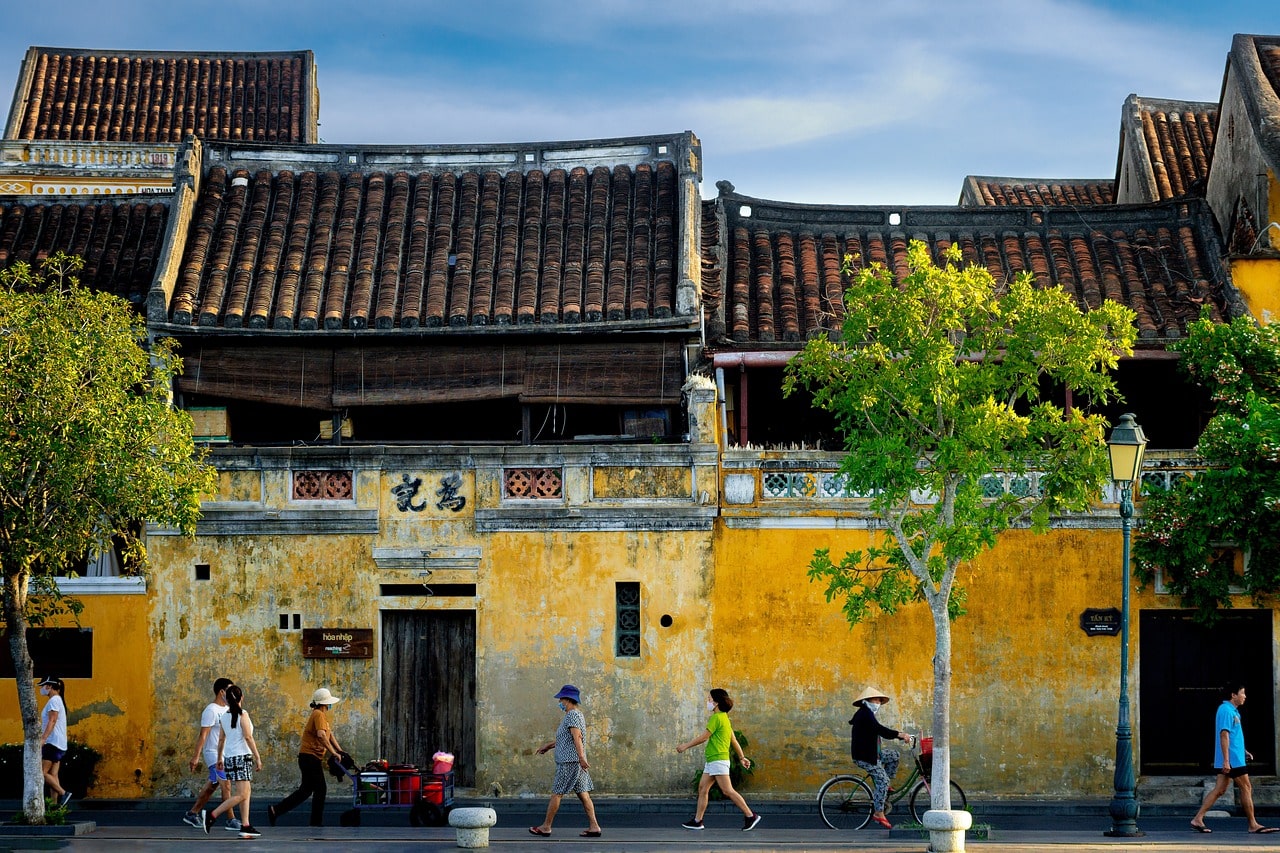
The sites group into four types: assembly halls, old houses, museums, and bridges and temples. This is a sampling, not the full roster, which shifts whenever a site closes for restoration.
Assembly halls were built by the Chinese trading communities that settled here in the 17th to 19th centuries. Fujian (Phuoc Kien), Cantonese (Quang Trieu), Hainan (Hai Nam), Trieu Chau, and the Chinese All-Communities hall. The Fujian Assembly Hall is the largest and most ornate; Quang Trieu is the quieter pick when Fujian is overrun.
Old houses are the lived-in merchant homes that survived 400 years of trade, war, and floods. The Tan Ky Old House (same family, seven generations on), Phung Hung Old House (the wood-pillared one with the river view), and Quan Thang are the headline picks. Each takes 15-20 minutes, and a family member usually gives a short informal tour as part of the visit.
Museums include the Folklore Museum (the long yellow building on the river), the Trade Ceramics Museum, the Sa Huynh Culture Museum, and the Hoi An Museum of History and Culture. The Folklore Museum is the most visitor-friendly. Skip Sa Huynh unless pre-Cham archaeology is your thing.
Bridges and temples: the Japanese Covered Bridge (Chua Cau), Quan Cong Temple, and the Minh Huong communal house. The bridge is the iconic photo - more on it below.
The five I would tell most first-timers to pick: the Japanese Bridge, Phung Hung Old House, Tan Ky Old House, the Fujian Assembly Hall, and either the Folklore Museum or Quan Cong Temple, depending on whether you want a longer indoor visit or a ten-minute temple stop.
How long the ticket lasts
Every other guide will tell you the ticket is "valid for 24 hours." That is not quite right, and the difference matters. The printed validity is a single day stamped on the slip, not a rolling 24-hour clock. But because the value lives in the five detachable coupons, the staff checking them are loose about the date. Plenty of visitors spread their five coupons across two or three days of the same trip and nobody blinks.
So the honest version: buy once, spread your sites across your stay, and do not feel you have to cram all five into one afternoon. Just do not bank on a single ticket covering a return visit weeks later - that is where the goodwill runs out.
One rule that is firm: one coupon per site, and once a slip is marked it is spent. You cannot re-enter a site or swap a marked coupon for a different one. Lose the master stub and several sites will turn you away, since they check against it.
The Japanese Covered Bridge, post-restoration
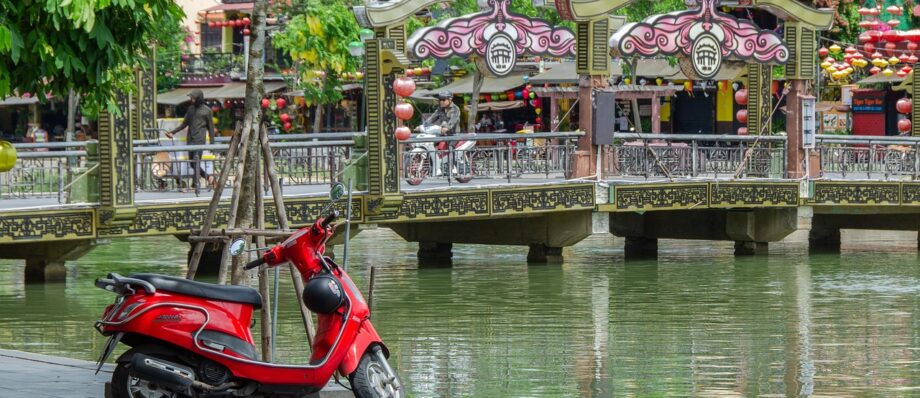
The Chua Cau reopened in August 2024 after a 19-month, 20.2-billion-VND restoration (about US$800,000, split evenly between the provincial and city budgets) that left it looking almost too clean (the fresh paint job drew a round of "they ruined it" complaints online before everyone calmed down). Crossing it costs one of your five coupons. You can photograph it from the bank for free, and honestly the outside is the photo - but stepping onto the bridge itself is a ticketed entry. Enforcement here is the loosest on the whole roster, since people cut through to the restaurants on the far side constantly, but officially it is a coupon.
Common scams to know about
The Old Town is low-friction by Vietnam tourism standards, but a few patterns recur enough to flag.
Fake ticket checkers on the street. Someone in a vaguely official shirt stops you on Tran Phu or near the Japanese Bridge and demands to see your ticket. Real enforcement happens at the entrance to each heritage site, never in the open street. Stopped on the street? Keep walking. Wardens do not operate that way.
Single-site tickets that do not exist. Touts near the booths offer to sell you "just one site" for 40,000-60,000 VND, claiming it is cheaper if you do not want all five. The city does not sell single-site tickets. Whatever they hand you is either a fake stub or a coupon torn off someone else's booklet, and neither works at the door.
The "booth is closed" redirect. A tout tells you the official booth nearby is shut and steers you to a friend selling at a markup. Booths run staggered hours; if one is closed, walk 200 meters to the next. There is always one open in daylight, and the price is exactly 120,000 VND - buy only from the official yellow huts.
Festival and free-entry days
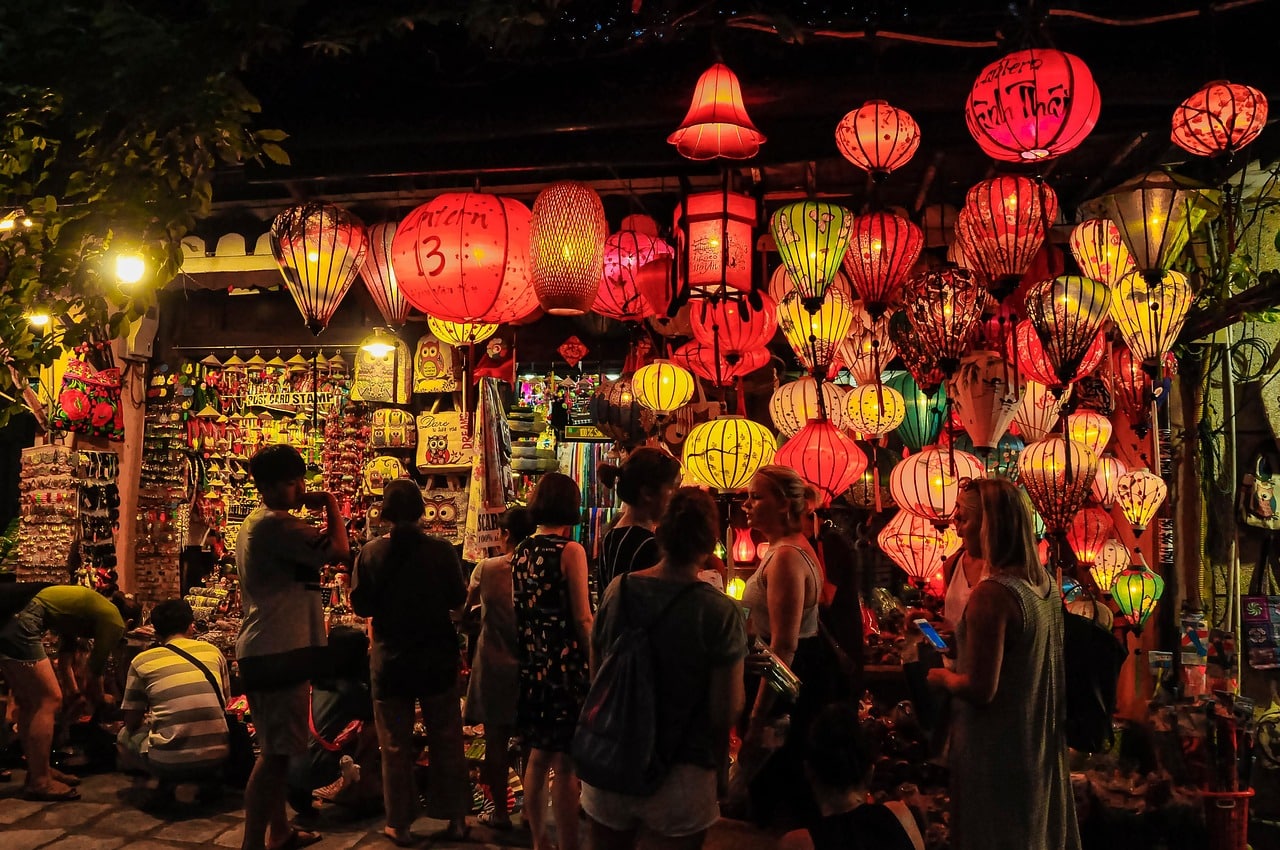
The monthly full-moon Lantern Festival does not waive Old Town tickets. The streetlights go dark, the lanes close to motor traffic, and the lanterns take over, but the heritage sites still charge. The atmosphere is the draw, not a discount.
Vietnamese national holidays sometimes produce free-entry hours at specific sites, but this varies year to year and the city does not publish a reliable schedule. If you happen to be in town on April 30, May 1, or September 2, ask at a booth.
Practical tips
Mornings before 9 a.m. are the quietest for the assembly halls and old houses. Late afternoon, from about 4 to 5 p.m., fills up fast as the day-trip buses arrive from Da Nang.
Site enforcement is daytime only, roughly 8 a.m. to 5:30 p.m. After the sites close, the evening lantern crowd takes over and nobody is checking coupons - which is the free half of Hoi An, and arguably the prettier one.
Booths are cash-only and easy to miss: small yellow huts ringing the pedestrian zone, including the Tran Phu and Hoang Van Thu corner, the An Hoi bridge approach, and the western edge near the Japanese Bridge.
The Japanese Bridge and the Fujian Assembly Hall draw the longest queues. If both are on your five, do them first thing before the tour groups land.
Frequently asked questions
Do I need a ticket just to walk around Hoi An Old Town?
No. Walking the streets, eating, shopping, and photographing the town are all free. The ticket only covers entry into the heritage buildings - the assembly halls, old houses, museums, and the Japanese Covered Bridge. Enforcement is at each site's door, not on the street.
How much is the Hoi An Old Town ticket in 2026?
120,000 VND for foreign adults, 80,000 VND for Vietnamese nationals, and free for children under 15 with a paying adult. The price has held since 2017. Booths are cash only.
Is the ticket really only valid for 24 hours?
Not exactly. The printed validity is a single day, but because it is a booklet of five coupons, staff routinely let visitors use the remaining coupons over a few days of the same trip. Spread your five sites across your stay; just do not expect it to cover a return visit weeks later.
Does crossing the Japanese Covered Bridge cost a coupon?
Yes, officially. Stepping onto the bridge uses one of your five coupons, though enforcement there is famously loose. Viewing and photographing it from the riverbank is free, and that is the better angle anyway.
Where does the ticket money go?
Mostly to the buildings and the families who own them. 84% of the Old Town's 1,273 protected relics are privately owned, and the city reserves 50-70% of ticket revenue to help those owners repair flood and storm damage, with 85% of the total going to preservation and management. Dozens of relics are still waiting on funding, so the scheme runs behind the need, not ahead of it.
Can I buy the Old Town ticket online?
Not the heritage ticket itself - that is cash only at the booths. If you would rather prebook, Klook sells a combo pass that bundles Old Town admission with a few other paid attractions (see below), but for the plain heritage ticket you buy at a yellow hut on arrival.
You cannot prebook the 120,000 VND heritage ticket - it is cash at the booth. But if you want to roll Old Town admission together with Thanh Ha Pottery Village, the Tra Que herb village, and the Hoi An Memories Show in one prepaid pass, this is the one to grab.
For getting your bearings once you are inside, see the Old Town area guide. For the wider list of historic sites and museums, browse things to do in Hoi An.
Related Hoi An guides
- Hoi An Central Market - what to buy, eat and skip
- Hoi An Memories Show - tickets, seats, and is it worth it
- Thanh Ha Pottery Village - the riverside craft village