
Best Cao Lau in Hoi An (2026)
Cao lau is the one dish on every Hoi An tourism bullet list that you cannot get anywhere else in the world, and that is by design. The thick yellow noodles are the centerpiece, and tradition holds that the dough water has to come from the Ba Le well in the Old Town, mixed with lye made from ash off a specific tree on the Cham Islands offshore.
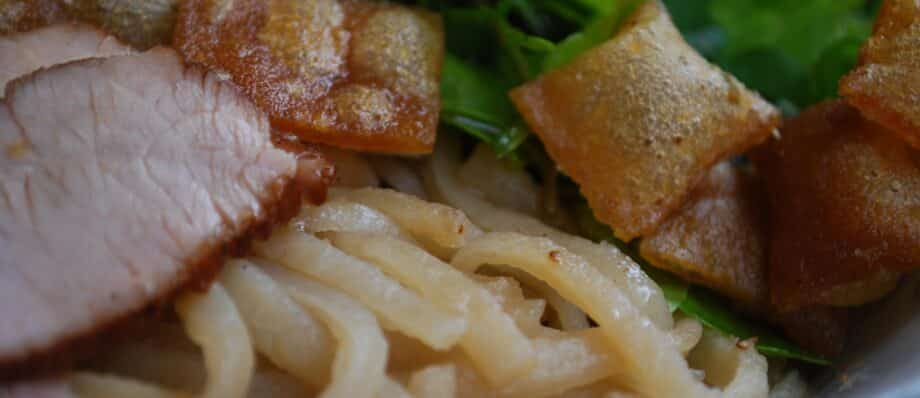
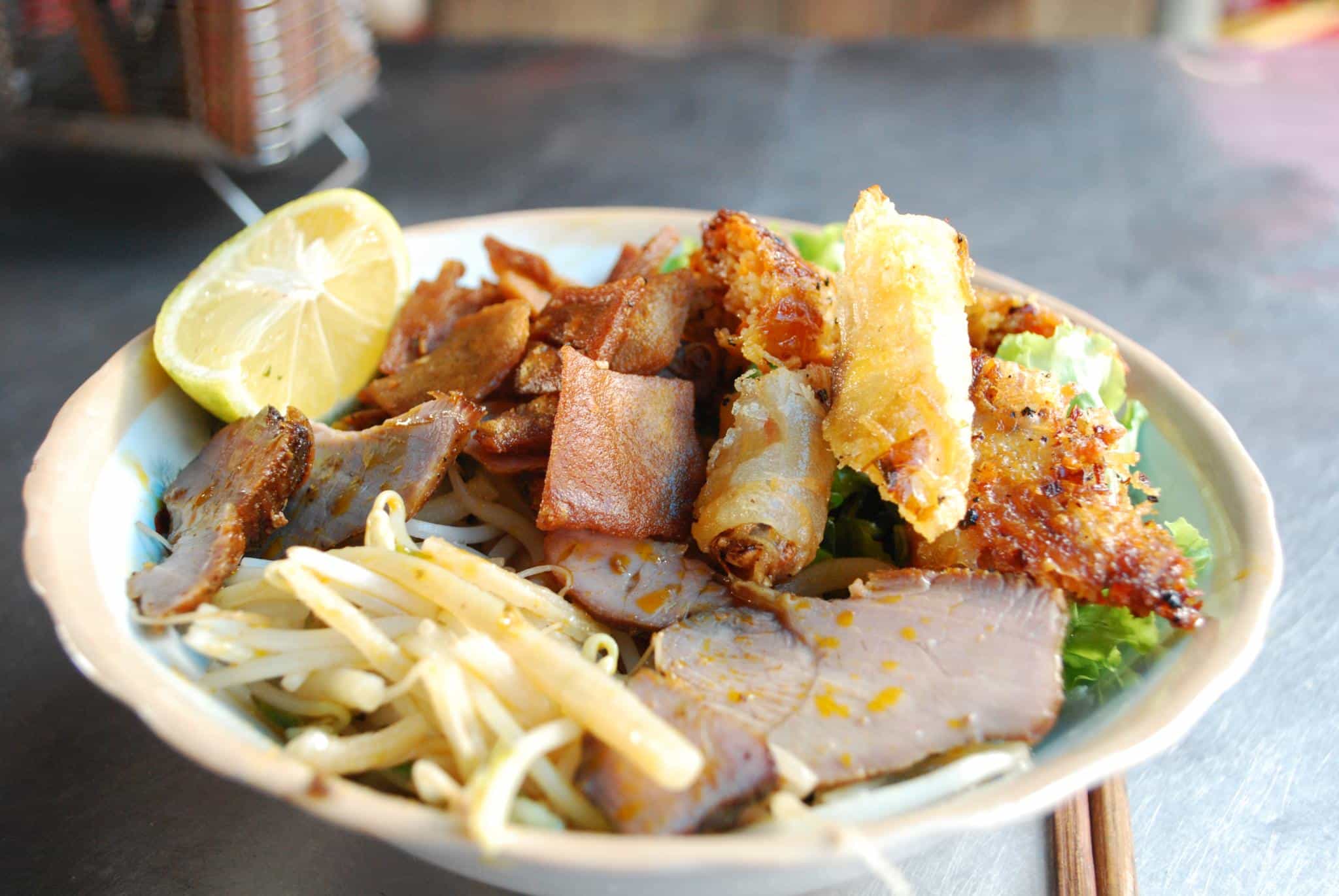
What lands in the bowl: chewy, slightly springy noodles with a yellow tint, sliced char siu pork, fresh herbs (mint, cilantro, lettuce, bean sprouts), crisp fried croutons cut from the same dough as the noodles, and only a small pool of dark, concentrated sauce at the bottom. It is almost dry by the time you start. Mix it all together yourself, then add chilli and a squeeze of lime to taste.
Cao lau has more in common with a dressed noodle salad than with pho or bun bo Hue. The texture is the point: chewy noodles against crunchy croutons against soft pork. If you are expecting soup, you will be confused for the first two minutes.
The shops below earn a spot for one reason: how close they land to the traditional version - noodle texture, croutons made fresh, not trucked in, and a kitchen that's been doing this for decades, not months.
Where to get traditional cao lau
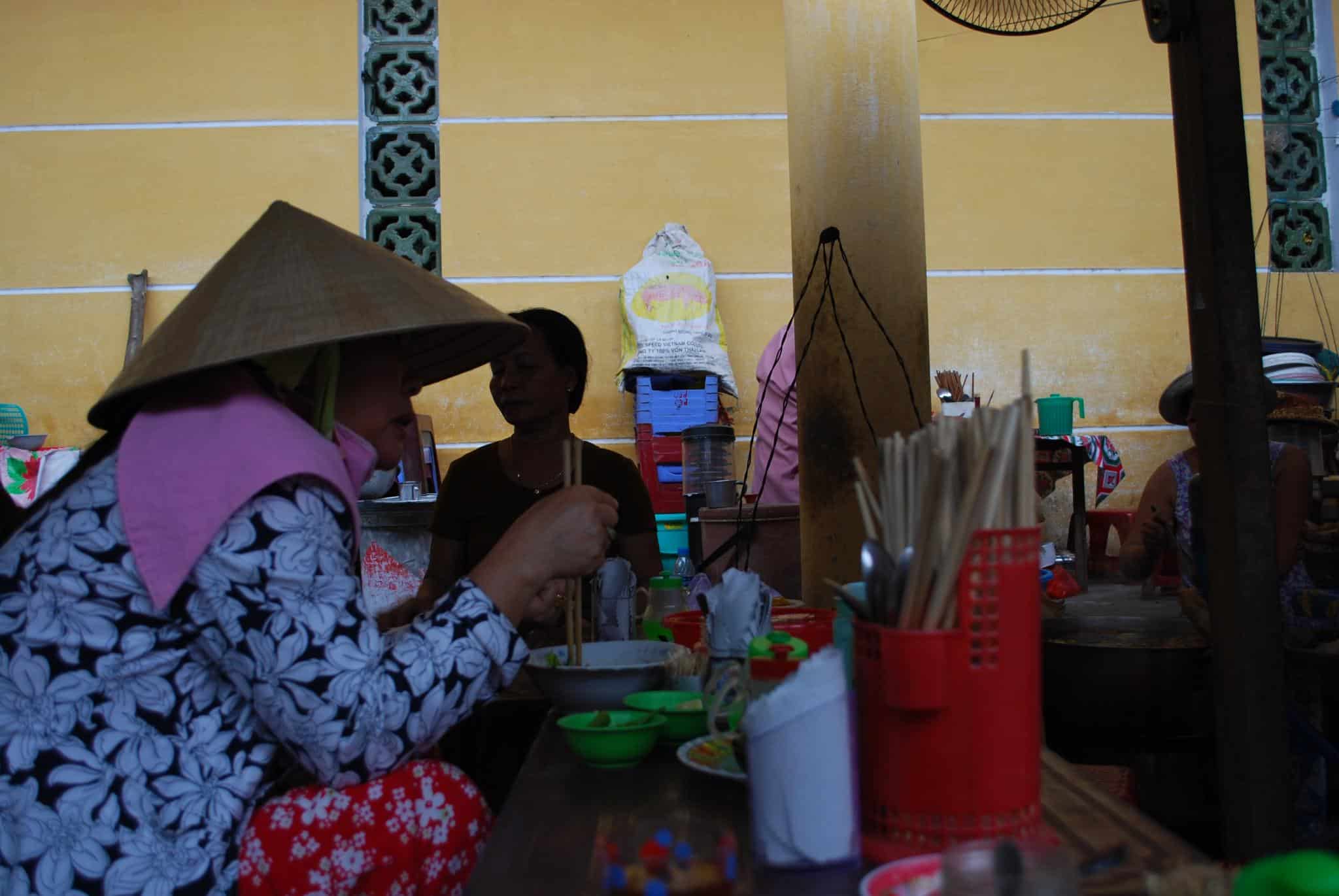
The good versions are easy to find if you know where to look. The bad ones are even easier, since every restaurant on the tourist drag lists cao lau and most of them should not. Three places worth your time, in the order I send people to them.
Thanh Cao Lau at 26 Thai Phien is the anchor. Handmade noodles with the chew properly developed, well-seasoned char siu, and the deep little pool of dark sauce at the bottom that the budget places skip. 35,000 VND for a small bowl, 50,000 for a large. Plastic stools, no frills, locals filling it by 11 a.m. - and it sells out by mid-afternoon. Eat here on day one, not day three; leave it to the end of your trip and you risk turning up to an empty kitchen.
Pho, Hu Tieu, Cao Lau is a no-sign alley spot on Tran Quoc Toan in Cam Chau, across from the Blue Sky Hotel. 40,000 VND a bowl, served to a crowd that is mostly locals and visitors already in the know. Cao lau is the order here even though they also do pho. Show up before 8 a.m. or you lose to the breakfast rush.
Banh Canh Ruong & Cao Lau Hoi An at 464/9 Cua Dai does a vegetarian cao lau worth detouring through the back lanes of Cam Chau for. Around 45,000 VND. The chilli jam on the table is not optional - stir a spoonful in and the whole bowl shifts. Family-run, short menu, motorbikes out front rather than tour buses.
The modern variations
A few Hoi An kitchens have started doing things with cao lau and its central-Vietnam noodle cousins that you will not see at the traditional shops. Worth knowing if you have done the classics, or want a sit-down version.
Vietnom Local Eatery on Tran Quang Khai runs a creative-Vietnamese menu where mi quang tron (a dry, mixed central-Vietnam noodle dish that overlaps with cao lau in style) sits next to nori nachos and brown-rice poke bowls. The mi quang tron is not strictly cao lau, but it scratches the same itch: dressed thick noodles, char siu, herbs, crunch. The team includes deaf and mute staff, and the place runs with a warmth that does not feel staged.
What you trade going modern: less street-food atmosphere and a slightly higher bill (mid-range rather than 50,000 VND a bowl). What you get: a kitchen that takes vegetarian options seriously, a quieter sit-down meal, and a different angle on a noodle tradition the tourist strip has flattened. For more, browse where to eat in Hoi An.
What a bowl costs and when to eat it
A correct bowl of cao lau in 2026 runs 35,000-50,000 VND at a traditional shop, 70,000-90,000 VND at a tourist-facing sit-down restaurant, and 100,000-150,000 VND in the Old Town trap zone (where you should not be ordering it). Portions at the traditional shops are smaller than Western noodle bowls; order a large, or plan on two if you skipped breakfast.
Locals eat cao lau for lunch. Most dedicated spots open at 6 or 7 a.m., do their main trade until early afternoon, and close once they sell out - by 4 p.m. most are done. If you are eating cao lau for dinner, you are eating at a tourist restaurant, by definition.
What to drink alongside: sua chua (yogurt drink) is the classic local pairing and cuts the richness of the pork; iced lemon tea is the runner-up. Skip the can of Coke - the sweetness flattens the herbs.
The Bourdain hook
Cao lau slots into the Hoi An dish-trinity that Anthony Bourdain helped cement, alongside the white rose dumpling and the banh mi at Phuong. He ate it in Hoi An on No Reservations back in 2009, in the episode titled "There's No Place Like Home" - not Parts Unknown, as it often gets miscredited - and by most accounts the bowl was at a stall in the Central Market rather than a sit-down restaurant. The banh mi pilgrimage to Phuong has since spun up its own micro-tourism economy, and cao lau rode the same wave. Almost every Vietnam guidebook published since pairs the same three dishes, and the city's restaurants have priced to match.
The full story of that pilgrimage - and whether the banh mi is still worth the queue - is in what Anthony Bourdain ate in Hoi An.
Where not to get cao lau
The Old Town tourist drag - Tran Phu, Nguyen Thai Hoc, the Bach Dang riverfront - is where most visitors eat their first bowl and leave thinking cao lau is fine but underwhelming. Pricing here runs 100,000 to 180,000 VND for a watered-down version with industrial noodles, more sauce than there should be, and pork pre-portioned at a central kitchen and reheated.
The tell: if a restaurant has cao lau, banh mi, pho, fried rice, and pizza on one menu, walk past.
Frequently asked questions
What is cao lau?
Cao lau is Hoi An's signature noodle dish: thick, chewy yellow noodles with sliced char siu pork, fresh herbs, bean sprouts, and crisp croutons, dressed in a small amount of dark sauce rather than served as a soup. It is closer to a warm noodle salad than to pho.
Why can you only get cao lau in Hoi An?
Tradition holds that the noodles need water from the Old Town's Ba Le well and lye from ash off Cham Island trees, which is why locals say it cannot be made authentically elsewhere. In practice production has consolidated to a handful of noodle-makers, so the well story is now more heritage than strict rule - but the dish remains a Hoi An specialty.
How much should a bowl of cao lau cost?
35,000-50,000 VND at a traditional shop, 70,000-90,000 VND at a tourist-facing restaurant, and an inflated 100,000-180,000 VND on the Old Town strip for a worse version. The cheap local bowls are the good ones.
Where did Anthony Bourdain eat cao lau in Hoi An?
He featured it on No Reservations in 2009 (the episode "There's No Place Like Home"), reportedly at a stall in the Hoi An Central Market. It is often miscredited to Parts Unknown.
What time should I eat cao lau?
Lunch, or earlier. The dedicated shops open in the morning and close when they sell out, usually by mid-afternoon. Eating it at dinner almost always means a tourist restaurant.
Related Hoi An guides
- Things to Do in Hoi An - what is actually worth your time