
What Anthony Bourdain ate in Hoi An, and what it's like now
One line of television turned a modest street stall into a two-storey restaurant with a queue that forms before 11am and doesn't really stop.
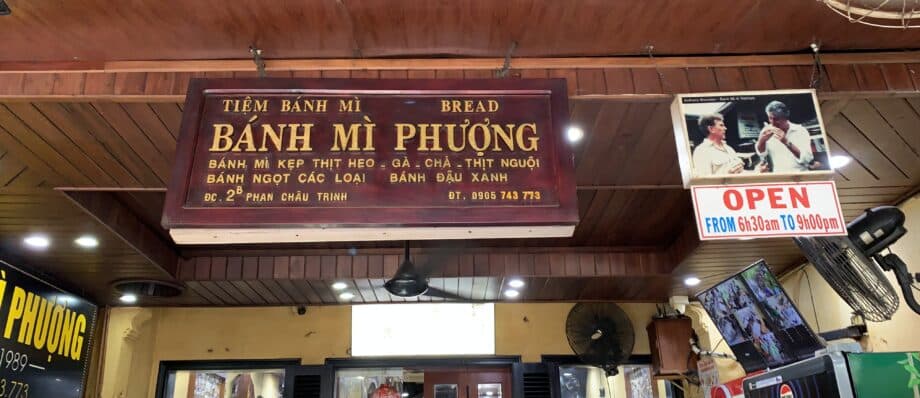
That's what happened here. Bourdain came to Hoi An with his French restaurateur friend Philippe Lajaunie, walked through the market, ate cao lau for breakfast, found a banh mi stall on Phan Chau Trinh Street, and said something on camera that the owner has since printed on the menu, framed on the wall, and repeated to every journalist who has visited since. Then he flew home. The stall kept going. The queue got longer every year.
That's the whole story, more or less. But it's worth understanding how it happened.
“There’s no place like home”
The episode is No Reservations, Season 5, Episode 10. The title tells you most of what you need to know about where Bourdain's head was at. He'd filmed in Vietnam before. The country would eventually account for eight episodes across three different shows, more than anywhere outside the US. But this one is different. It's personal in a way the earlier episodes aren't.
By the time he reaches Hoi An, he's already talking about moving here. Bringing his family. Living for a while. The city, with its lantern-lit Old Town and its relative quiet after the noise of Saigon, clearly does something to him. It does this to most people, but Bourdain was never shy about saying it out loud.
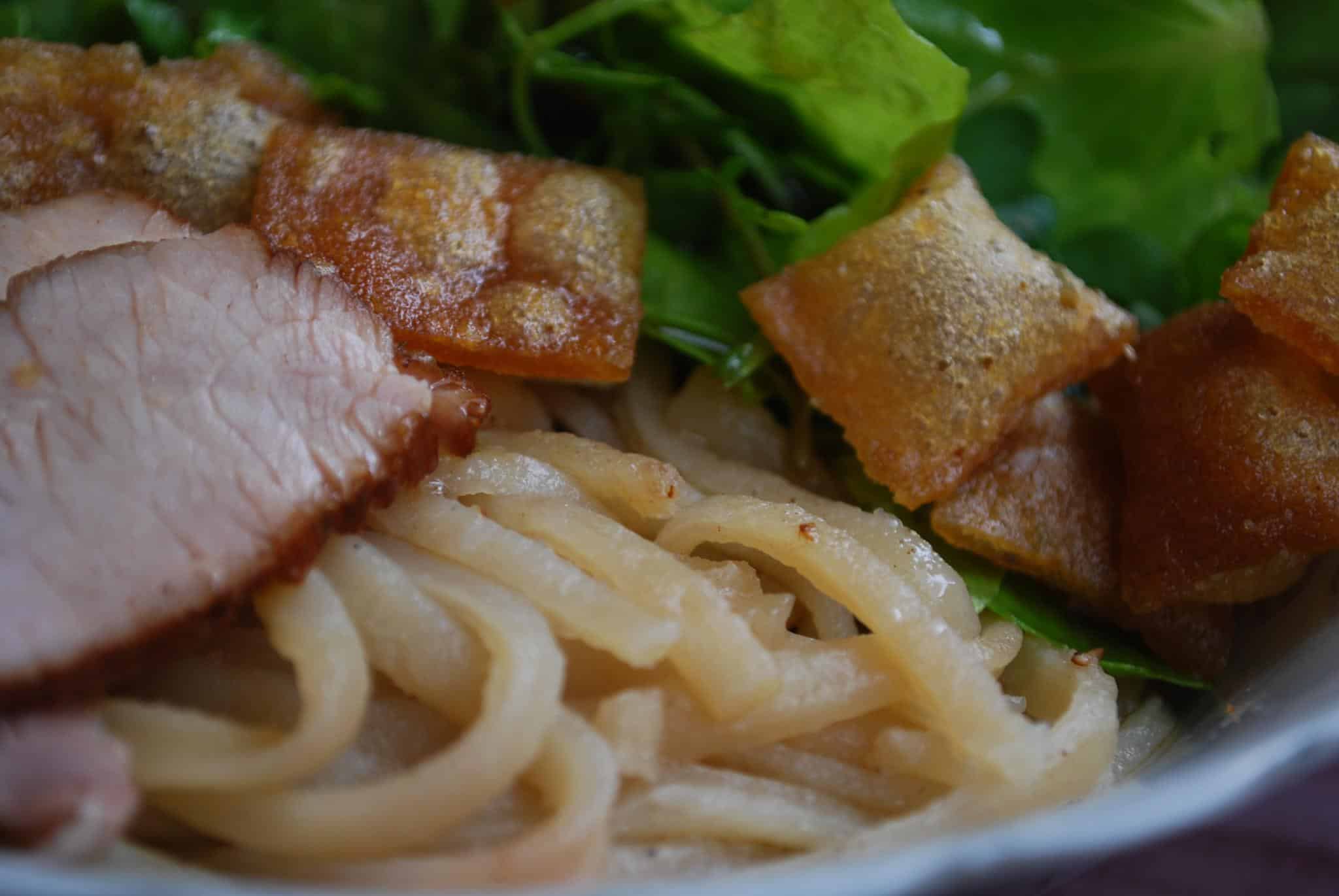
He and Lajaunie spend the morning in the market. They eat cao lau, Hoi An's signature noodle dish: pork and noodles in a broth that's supposedly impossible to replicate outside the city because it requires water drawn from a specific local well. Whether that's true or food mythology doesn't particularly matter. What matters is that it tastes like nowhere else, and Bourdain ate it at the market stalls rather than a restaurant, which is the correct call.
Then they find the sandwich.
Cao lau, and why it comes first
Before Bánh Mì Phượng gets all the attention, it's worth spending a moment on the cao lau, because it's the better argument for why Hoi An's food scene is worth the trip.
The noodles are thicker than most Vietnamese noodles and have a slightly chewy texture from the ash used in their preparation. The broth is smoky and savoury. On top: slices of char siu-style pork, fresh greens, crispy rice crackers. It's a small bowl and it costs almost nothing and it is, by most reasonable measures, one of the better things you can eat in Southeast Asia.
The Central Market food stalls (Tran Quy Cap, in the covered hall) are where Bourdain ate it. Get there before 9am if you want to eat alongside locals rather than tourists. After that, the composition of the queue changes.
“A symphony in a sandwich”
That's the quote. Bourdain said it about Bánh Mì Phượng and it has been following the place around ever since.
When he visited in 2009, the shop at 2B Phan Chau Trinh was small and relatively unremarked upon. Now it's a two-floor operation with Bourdain's face on the menu, a tourist board endorsement, and a line of people that forms before lunchtime and stays there. His photo from the No Reservations shoot is framed and positioned so that it's the first thing you see when you reach the counter.
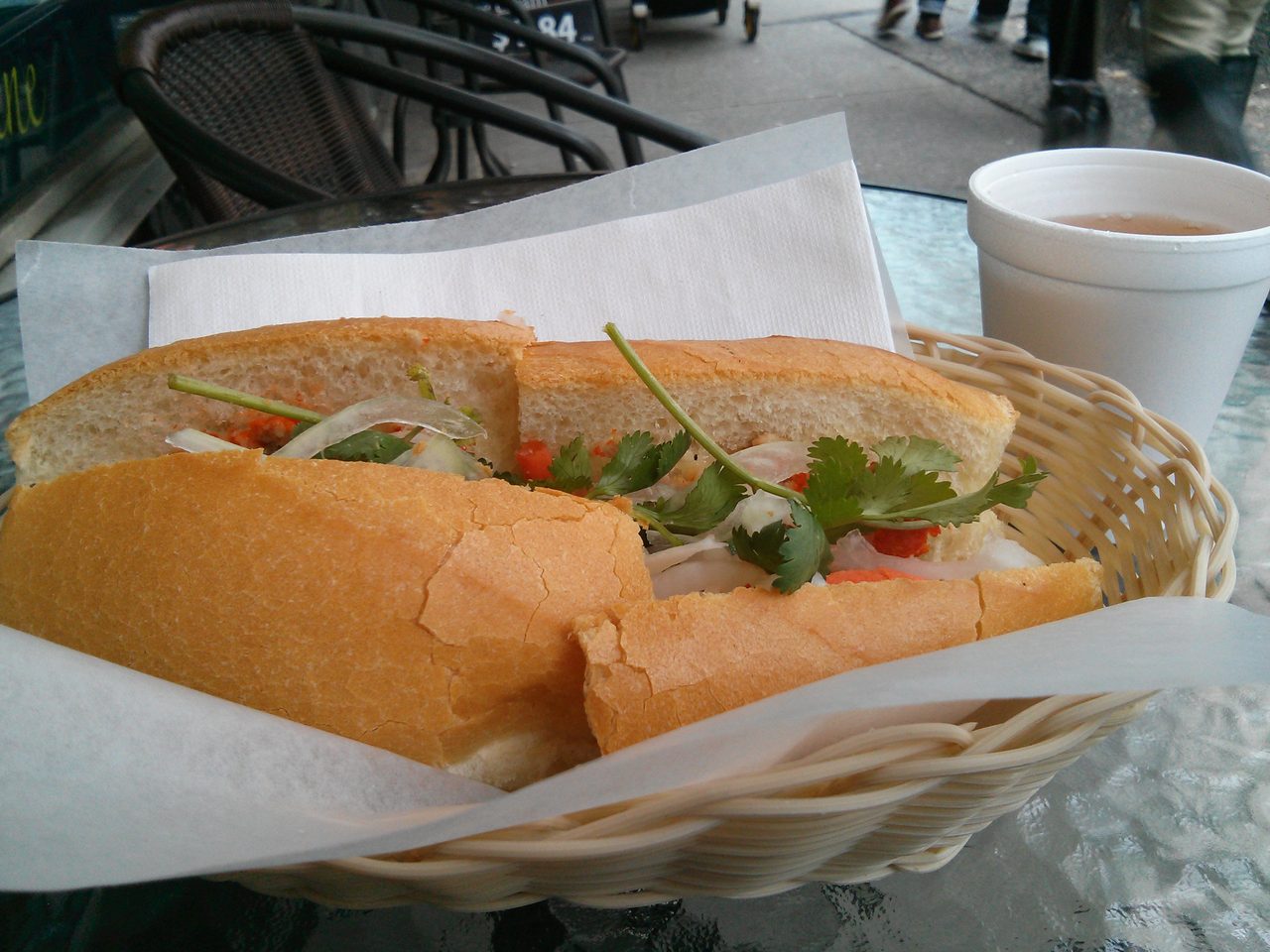
He ordered the special: liver pâté, ham, cucumbers, fish paste, mayonnaise, fresh herbs, all of it crammed into a warm baguette that is somehow both soft and crispy at the same time. The baguette shape here is distinctively central Vietnamese, shorter and fatter than what you'd find in Saigon. Order the same thing he did, or just say "special" and let them build it.
The honest question is whether it's still worth it given the crowds. The answer is yes, but with caveats. Go early, before 10am if you can. The queue moves quickly, usually 10-15 minutes, and the sandwich is still very good. The experience of eating it at a plastic table on the pavement, watching the street, is still the experience. What's changed is the volume of people around you doing exactly the same thing for exactly the same reason.
That's a Bourdain problem, not a Bánh Mì Phượng problem.
Be honest with yourself about what this is, though: a trip like this is more about nostalgia and fandom than finding the best sandwich in town. We actually rated the banh mi at Bánh Mì Cô Liên on Cửa Đại higher - shorter queue, and the bun cary is the move - but we joined the line at Phượng anyway, because of course we did. You come to follow in Tony's footsteps. That is the whole point.
What Bourdain really did
He didn't discover Hoi An. The Old Town was already a UNESCO World Heritage Site when he showed up. Bánh Mì Phượng was already well-regarded by locals. Cao lau had been a Hoi An staple for centuries before a television crew pointed a camera at it.
What Bourdain did was say, plainly and on television watched by millions, that a $1.50 sandwich from a street stall in a small Vietnamese city was as good as food gets. He didn't dress it up. He didn't qualify it. He just said it. That's a different thing from discovering something, and it's arguably more useful.
The question of whether the places he visited are better or worse for the attention is one that doesn't really have a clean answer. The queues are longer. The prices are higher. The photos of Bourdain are everywhere. But Bánh Mì Phượng is still run by the same family and still makes the same sandwich, and the stalls at the Central Market are still there, and Hoi An is still Hoi An.
For what it's worth, Clarkson came here too, around the same time, and called the city Savile Row because he was more interested in getting a suit made than eating a sandwich. That's a different article, but the point stands: something about this city gets into people and refuses to leave.
Bourdain said he wanted to move here. He never did. The sandwich is still worth the queue.
Sources: No Reservations, Season 5, Episode 10 (Travel Channel, 2009). Additional detail from Vietnam Coracle and Eat Like Bourdain.
Frequently asked questions
Where did Anthony Bourdain eat in Hoi An?
He ate cao lau at the Central Market food stalls and a banh mi at Banh Mi Phuong (2B Phan Chau Trinh), filmed for No Reservations in 2009.
What did Bourdain say about Banh Mi Phuong?
He called the banh mi "a symphony in a sandwich." The shop has printed the line on its menu and framed his photo by the counter ever since.
Which Bourdain episode features Hoi An?
No Reservations, Season 5, Episode 10, "There's No Place Like Home" (2009) - not Parts Unknown, as it is often miscredited.
Is Banh Mi Phuong still worth the queue?
Yes, with caveats. Go before 10am; the line usually moves in 10 to 15 minutes and the sandwich is still very good. The crowds are the only real downside.
What is cao lau?
Hoi An's signature noodle dish - thick, chewy noodles with char siu pork, fresh greens, and crisp crackers in a little broth. Bourdain ate it at the market, which is the right call.
Related Hoi An guides
- Best Pho in Hoi An - where to find a proper bowl
- Hoi An Central Market - what to buy, eat and skip
- Things to Do in Hoi An - what is actually worth your time