
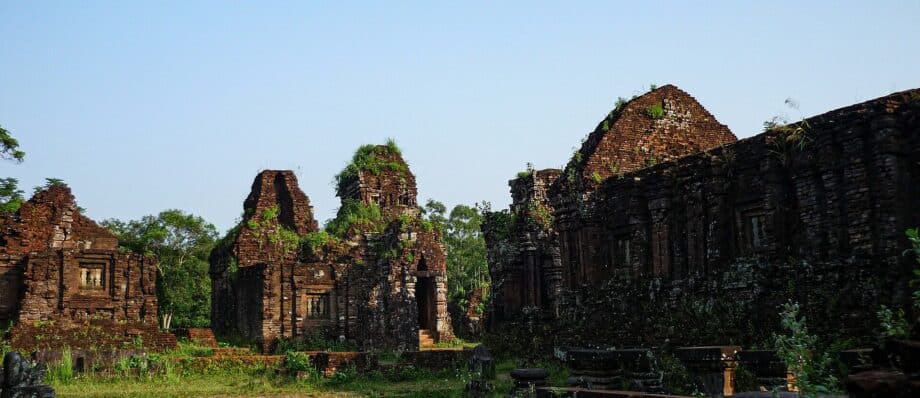
My Son Sanctuary: A Day Trip Guide from Hoi An
My Son Sanctuary is the cluster of brick-and-stone temple ruins 40 km southwest of Hoi An, built between the 4th and 13th centuries by the Champa civilization that once ruled coastal central Vietnam. It was the Cham kings' main religious complex for the better part of a thousand years, dedicated principally to the Hindu god Shiva, and it predates Vietnam's later Buddhist-majority culture by centuries. UNESCO listed it in 1999, both for the architecture and for what it represents: a civilization most visitors to Vietnam have never heard of.
What stands today is a fraction of what was once here. Roughly 70 structures across groupings labeled A through K survived into the 20th century. By the late 1960s most had been damaged or destroyed by US aerial bombing - the temples sat in a Viet Cong-controlled valley and were hit hard, with a week of bombing in 1969 flattening the largest tower, A1. The crater is still there, deliberately preserved. So what you walk through now is a partial restoration of what survived the 1960s, which was already a fraction of what stood in 1900.
For anyone based in Hoi An, the real question is not whether My Son is worth seeing but whether it earns a half-day against everything else competing for the slot. Honest take below.
Is it worth it? Pretty, but underwhelming
We'll be straight: we found My Son pretty but underwhelming. The brick towers in their jungle valley photograph beautifully in soft early light, and the carving on the surviving lintels is excellent - but you've seen the bulk of it in half an hour, and a lot of what gets called "temple" turns out to be foundation and rubble.
It's also, unavoidably, the third-best ancient site in the neighborhood. Angkor Wat is 90 minutes away by plane and almost entirely intact. Bagan has thousands of pagodas across one plain. My Son has dozens of partial structures in a small, partly bombed valley. On looks alone, it loses.
What it has instead is historical specificity. This is the only major Cham site you can reach easily, and the Cham are the missing chapter in most foreign visitors' picture of Vietnam - which tends to skip straight from "Hindu Khmer empire" to "French colonial rule" and leave out the 1,500 years in between. If filling that gap is the point of your trip, the half-day pays off. If you've already done Angkor and Bagan and you're deciding what to cut, this is the easy cut. UNESCO's listing decision is built on exactly that gap.
Getting there from Hoi An
My Son sits 40 km southwest of Hoi An, about an hour by road. Three ways to do it.
Group tour. The cheapest option, around USD 15-20 per person all-in (transport, English guide, ticket, sometimes lunch). Hotel pickup at 5 a.m. for sunrise tours or 8 a.m. for the standard half-day. The downsides are the bus crowd at peak hours and a fixed schedule that doesn't care how fast you walk.
Private car with driver. Around 800,000-1,200,000 VND round trip with the driver waiting through your visit. Worth it for two or three people, and most Hoi An hotels can arrange it within the hour. You control the pace.
Self-drive scooter. An 80 km round trip on mostly flat roads, about 1.5 hours each way at a relaxed pace. The road is in decent shape, but it's not a beginner ride - the highway sections move faster than the Hoi An back lanes. Rental runs 120,000-150,000 VND a day. Note that as of 2025 the traffic police are stricter about foreign riders: you legally need a 1968-Convention International Driving Permit with a motorcycle endorsement, or you risk a fine.
Sunrise tour or afternoon?
Every operator pushes the sunrise tour as the premium pick, and on light and crowds they're right: 5 a.m. pickup, on site for opening, two near-empty hours, back in Hoi An by 11. What they don't tell you is that the dance doesn't start until 9 a.m. - so the sunrise crowd is usually back on the bus before a single Apsara performance begins. You trade the cultural bit that's included in your ticket for the empty ruins.
The afternoon move is the underrated one. Go late, catch the 14:00 or 16:00 dance, wander the groupings as the morning buses are long gone, and - if you book the version that offers it - return to Hoi An by boat down the Thu Bon instead of fighting road traffic. Plenty of tours run this exact loop, often with a riverside craft-village stop on the way back. Quieter ruins, the dance included, a scenic ride home. The only thing you give up is the dawn light.
So the real choice isn't "pay more for the better tour." It's empty ruins and soft light with no dance (sunrise), or the performance plus a boat ride back with slightly more company (afternoon). Pick the one that matches what you came for.
Tickets and timing
The standard foreign-visitor ticket is 150,000 VND, which covers entry, the shuttle buggy from the parking area to the temple groupings, the on-site Cham exhibition house, and the dance performance at the theater. Children under 5 go free; ages 5 to 15 pay a flat 30,000 VND. Verify the price on arrival - it has crept up over the years.
The site opens around 6 a.m. and closes at 5 p.m. in winter, 5:30 in summer. The Cham dance performances run at set times: roughly 9:00, 9:45, 10:30 and 11:15 in the morning, then 14:00, 14:45 and 16:00 in the afternoon. They're short - 15 to 20 minutes - professional, and worth catching if your timing lines up. Note that first slot: nothing dances before 9 a.m.
Time of day matters more here than at most Vietnam sites. Open at 6 a.m. buys you a couple of hours before the buses. Arrive at 4 p.m. and you get softer light with the day-trippers leaving. The middle of the day is the worst window - hot, crowded, harsh light, almost no shade.
What you will see on site
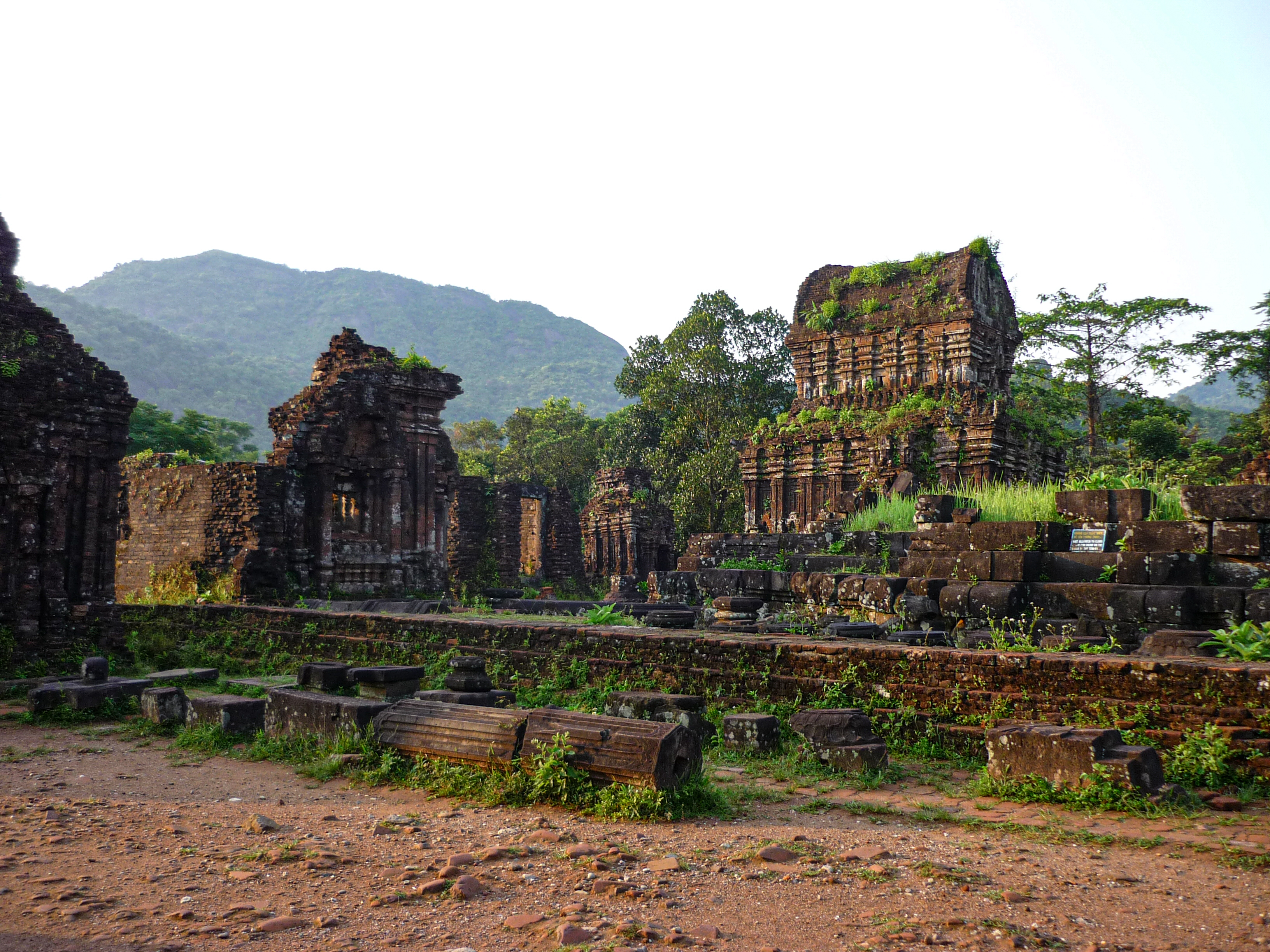
The surviving groupings sit in a loose circle inside a small valley, linked by short paths through low jungle. Most people walk them in roughly this order.
Group B. The northern grouping, including the partly-restored B5 prayer hall with its boat-shaped roofline - one of the few Cham buildings where you can still read the original architectural intention. Give it 15-20 minutes.
Group C. Next to B, with C1 still standing tall enough to convey the original scale. The lintel and pilaster carving here is the best surviving Cham stonework on the site.
Group D. Two long galleries now serving as open-air museums for the carved fragments pulled from the bomb sites. Worth slowing down for - the inscription stones in the western gallery hold the dynastic record of the Cham kings.
Group A. The bombed area. Where A1, the largest tower, once stood, now a flat brick foundation with a memorial plaque, and the preserved bomb crater on the east edge.
Groups G and E. The smaller, less-visited groupings on the southern edge. Worth the extra 20 minutes if you're not on a tight schedule - quieter, and the angles looking back toward the central groupings are the best photos on the property.
What to wear and bring
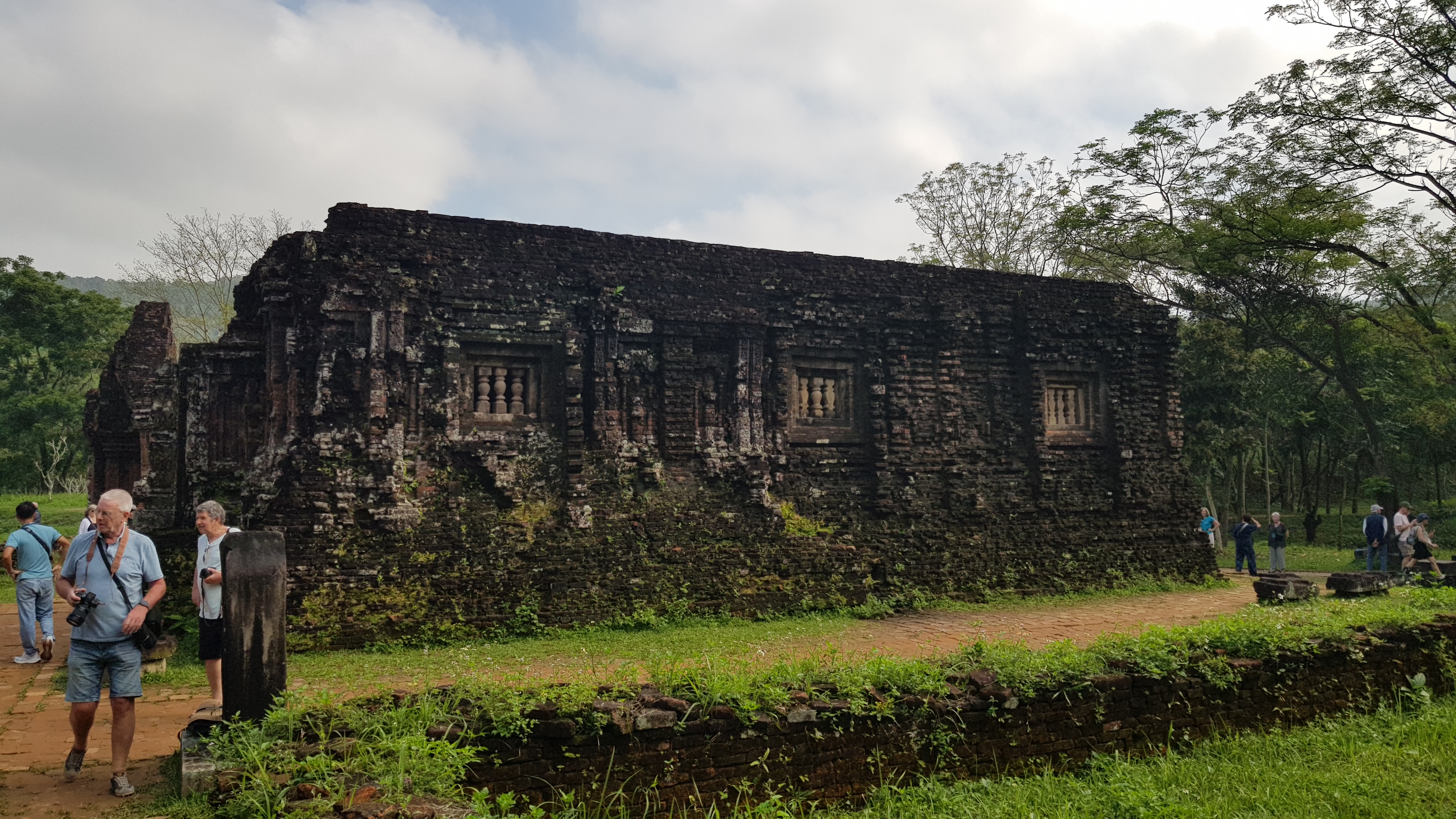
Real shoes, not flip-flops. It's dirt paths and uneven brick steps, especially in the older groupings.
Sun cover. There's almost no shade between groupings - hat, sunglasses, and at least a 750 ml water bottle. Sunscreen if you burn.
Modest clothing. No enforced dress code, but it's still a religious site, so shoulders and knees covered is the right etiquette. A light scarf does the job.
If you're stringing day trips together, the Marble Mountains guide covers the other big half-day out of Hoi An (they sit in different directions, so they're better as separate days than a rushed combo). A morning at My Son also pairs neatly with an afternoon Hoi An cooking class. For the rest, see all day trips from Hoi An.
Frequently asked questions
Is My Son Sanctuary worth visiting?
It's a history visit more than a photography one. We found it pretty but underwhelming on looks alone - it's the third-best ancient site in the region after Angkor and Bagan. But if you're interested in the Cham civilization or central Vietnam's pre-colonial history, it's the only major Cham site you can reach easily, and on that basis it earns the half-day.
How much does My Son cost to enter?
The foreign-visitor ticket is 150,000 VND, which includes entry, the shuttle buggy to the temple groupings, the on-site Cham exhibition house, and the dance performance. Children under 5 are free; ages 5 to 15 pay 30,000 VND.
How do you get to My Son from Hoi An?
It's 40 km southwest, about an hour by road. Most people take a group tour (USD 15-20), a private car with driver (800,000-1,200,000 VND round trip), or self-drive by scooter (an 80 km round trip, for confident riders only).
Is the My Son sunrise tour worth it?
For empty ruins and soft light, yes. But the Cham dance performances don't start until 9 a.m., so sunrise tours are usually back on the road before any dance begins. If you'd rather catch the performance and skip the crowds, an afternoon tour - ideally one that returns to Hoi An by boat down the Thu Bon - is the better call.
What time are the Cham dance performances at My Son?
Roughly 9:00, 9:45, 10:30 and 11:15 in the morning, then 14:00, 14:45 and 16:00 in the afternoon. Each runs 15 to 20 minutes and is included in your ticket. Confirm the current schedule on the day, as times shift seasonally.
Related Hoi An guides
- Ba Na Hills & the Golden Bridge - cable car and the giant hands
- Hai Van Pass - the Hoi An to Hue motorbike route
- How to Get to Hoi An - flights, trains, and the last 30km