
Hoi An Central Market: What to Buy, Eat and Skip (2026)
Hoi An Central Market (Cho Hoi An) is the everyday wet market at the eastern end of the Old Town, running along Tran Phu and the Bach Dang riverfront. It is where Hoi An's restaurants buy their morning produce, where locals do their grocery shopping, and where the cooking-class market tours start at 7 a.m. Open roughly 5 a.m. to 7 p.m., busiest from 6 to 9 a.m., quietest after 4 p.m.
This is not the Night Market. The Hoi An Night Market is a separate evening lantern-and-souvenir affair on Nguyen Hoang Street, across the river on An Hoi islet. Both have their place: if you want fresh seafood and the energy of a working market, you want this one. If you want paper lanterns and a postcard photo of the riverfront at dusk, you want the Night Market.
Shop the edges, skip the middle
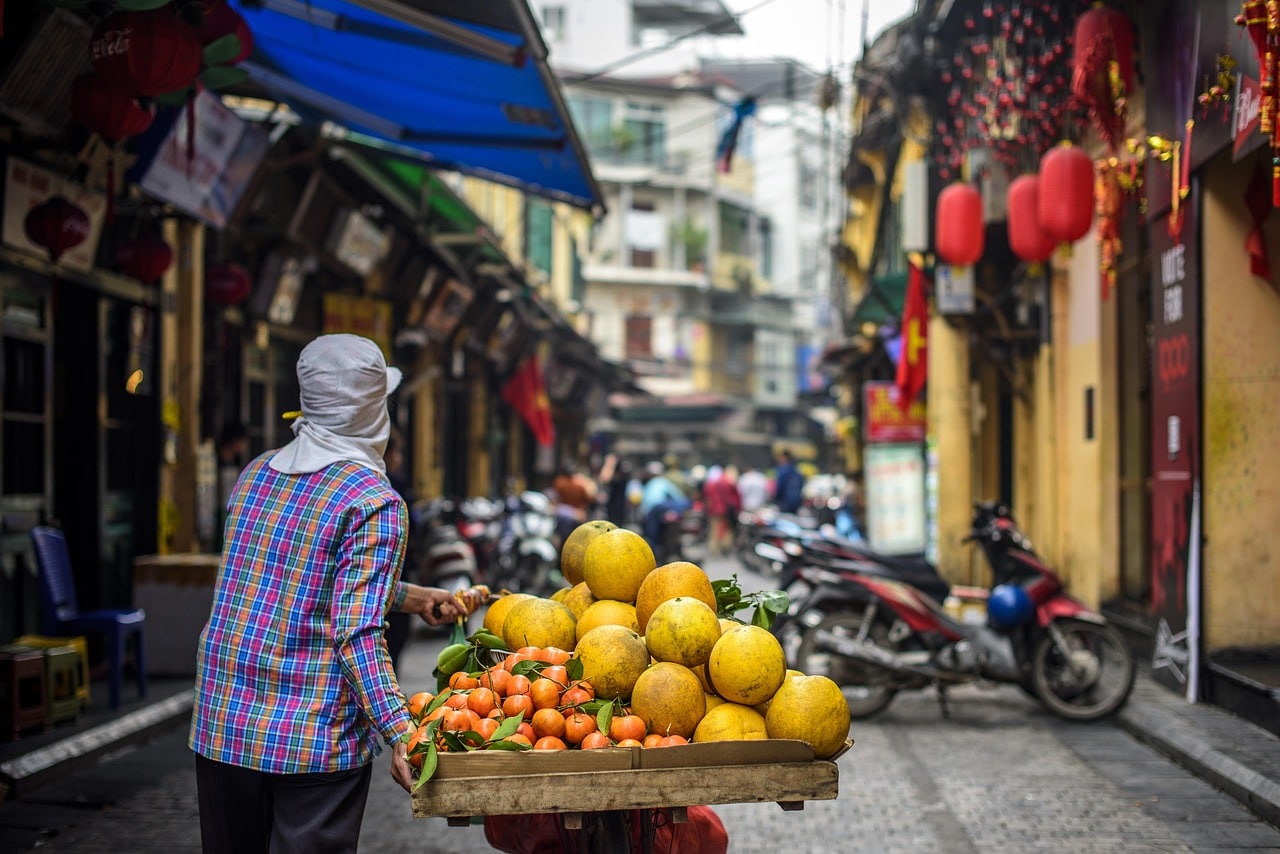
The covered central aisle of the market has slowly filled with souvenir stalls aimed squarely at tour groups - fridge magnets, mass-made lanterns, the same printed tea towels you see in every Vietnamese tourist town. That is not the market locals use. The real market is the perimeter and the riverside: the produce, the meat, the seafood, the food court. Cut straight through the tourist aisle and work the edges, and you are shopping where Hoi An actually shops.
The food court inside
At one end of the covered hall is a small food court where stalls sell cao lau, mi quang, bun bo Hue, com ga (Hoi An's turmeric chicken rice), banh mi, and a rotating set of small Vietnamese plates for 25,000-50,000 VND a serving. This is the cheapest sit-down breakfast in the Old Town, and the locals filling the plastic stools at 7 a.m. are the signal that it is also a good one.
Two patterns to follow. First, look for the stall with a queue of locals on motorbikes parked outside - almost always the right pick. Second, when the menu is Vietnamese-only and impenetrable, point at what the person next to you is eating. Most vendors will happily adjust the order down if you signal it is too much.
The cao lau here is worth seeking out - this market is, by most accounts, where Anthony Bourdain ate his bowl on camera. The com ga is the other one to try: poached chicken over turmeric-yellow rice cooked in the stock, a Hoi An specialty as much as cao lau. What you will not get at the food court: English menus, Western coffee, or much seating in the peak. Aim for 7 a.m. or after 10 a.m., not the 8-9 a.m. crush.
What to buy
The market is organized in rough zones, with plenty of overlap.
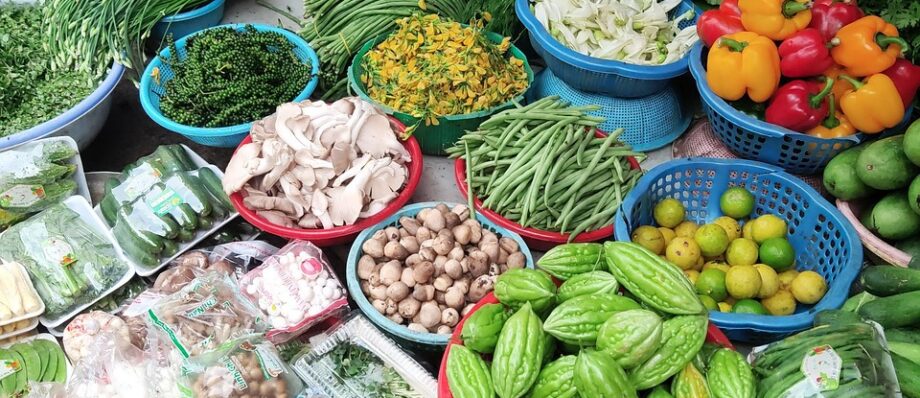
Fresh produce fills much of the hall: vegetables, herbs, tropical fruit (rambutan, mangosteen, dragonfruit, pomelo in season), eggs, tofu, and rice. Prices are negotiable but generally 30-50% under what tourist-strip restaurants charge. A dragonfruit runs 15,000-25,000 VND; a kilo of rambutan, 35,000-50,000 VND.
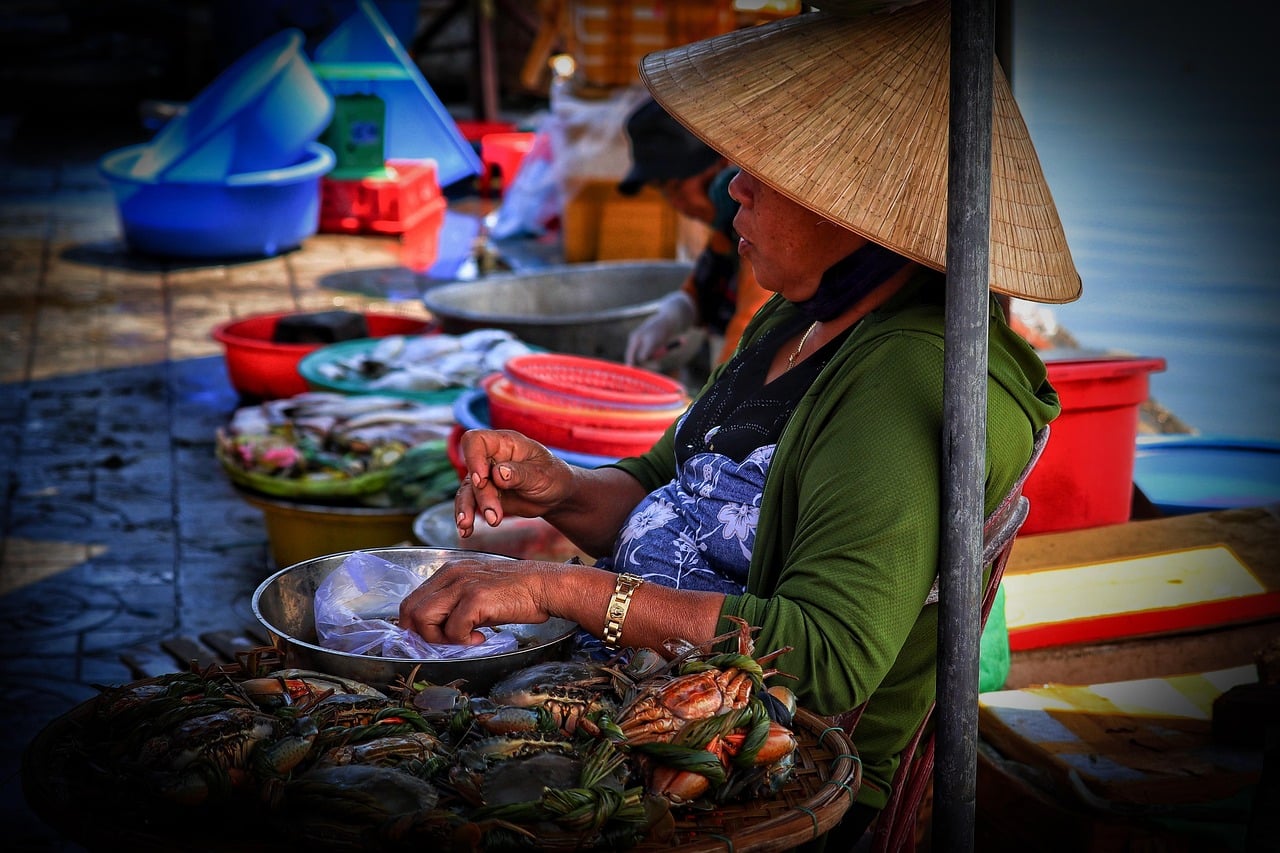
Fresh meat and seafood sit toward the riverside. The seafood is the headline - morning catch off the Cua Dai boats: squid, prawns, mackerel, the occasional crab. Buy by the kilo, point at what you want.
Dry goods and spices fill the inner aisles: chili pastes, dried squid, fish sauce, lemongrass, dried mushrooms, and the local sa te (lemongrass-chili paste) that is good enough to bring home in a checked bag.
Fabric and silk for tailoring takes up part of the hall. This is where many Hoi An tailors source their cheaper bolts, and where you can buy the same fabric for 30-50% less than the tailor shops charge - useful context if you are getting clothes made and want to see the markup at the source.
Cooking-class market tour
Most of the well-known Hoi An cooking classes open with a market tour here, between 7 and 8:30 a.m. The instructor walks you through the produce, explains what is in season, names the herbs and the dipping sauces, and lets you taste what the food court is cooking. After 30-45 minutes you transit to a kitchen - often in Cam Thanh or Tra Que village - to cook the lunch.
If you are taking a class anyway, the market tour is the easiest way to make sense of what you are looking at - the instructor names the herbs you have been eating all week and explains how the market is laid out. If you are not booking a class, joining one purely for the market portion is overkill; just walk through on your own at 7 a.m. with the notes above and ask the food-court vendors what they are cooking.
What it costs and how long to spend
Entry is free. A walk-through plus breakfast costs 25,000-50,000 VND for a bowl and a coffee or sugarcane juice. Add a kilo of fruit and a bag of dried squid for the room and you are at 100,000-150,000 VND total.
Time budget: 30 minutes for a walk-through, 60-90 minutes if you eat breakfast and shop, plus another hour for a guided market tour as part of a cooking class.
Practical tips
Cash only, in small denominations. Small notes (10k, 20k, 50k VND) help; vendors will not always have change for a 500k.
Bargaining is part of the rhythm, but the tone in Hoi An is gentler than in Hanoi or Saigon. Start at 70% of the asking price for non-food items and settle around 80-85%. For fresh food, prices are more or less fixed.
Photography is fine for the produce and food stalls; ask before photographing the meat and fish vendors directly, as some are uncomfortable with it.
Best time to go: 7 to 8 a.m. for the working-market peak and the food-court warm-up, or 4 to 5 p.m. for a quieter visit as the day cools. Mid-morning (10 a.m. to noon) is the worst window - the locals have left, the heat is rising, and the unsold produce is starting to look it.
Frequently asked questions
What are the Hoi An Central Market opening hours?
Roughly 5 a.m. to 7 p.m. daily, busiest from 6 to 9 a.m. and quietest after 4 p.m. The food court and produce are at their best early; go at 7 a.m. for the full working-market experience.
Is the Central Market the same as the Night Market?
No. The Central Market is the daytime wet market at the east end of the Old Town. The Night Market is a separate evening lantern-and-souvenir market across the river on An Hoi islet.
What should I eat at the market food court?
Cao lau, com ga (Hoi An turmeric chicken rice), mi quang, and a 25,000 VND banh mi are the picks. Follow the stall with the most local motorbikes parked outside, and eat at 7 a.m. or after 10 to dodge the breakfast crush.
Do I need to pay to enter?
No, entry is free. You only pay for what you eat or buy - a bowl and a drink runs 25,000-50,000 VND.
Is the market worth visiting without a cooking class?
Yes. Walk through on your own at 7 a.m., skip the souvenir aisle in the middle, shop the produce and seafood on the edges, and eat breakfast at the food court. A guided tour is only worth it if you are taking the cooking class it is attached to.
Related Hoi An guides
- Best Cao Lau in Hoi An - the town's signature noodle
- Best Pho in Hoi An - where to find a proper bowl
- Hoi An Old Town Tickets - prices, sites and scams
- Things to Do in Hoi An - what is actually worth your time