

An Bang Beach: What to Expect and How to Make the Most of It
An Bang Beach is a village beach, not a resort strip. Low-rise seafood restaurants sit directly on the sand, plastic chairs and all. Fishing boats line the shore. The Da Nang skyline is visible to the north on clear days, and the Cham Islands appear offshore when the haze lifts. What you get is 4 kilometers of swimmable beach attached to a small community of homestays, cafes, and a few bars that play live music after dark.
The beach works well as a half-day or full-day escape from Hoi An’s Ancient Town. It does not work as a destination you fly into Vietnam specifically to visit. That distinction matters. People who arrive expecting the Maldives leave disappointed reviews on TripAdvisor. People who arrive expecting a decent local beach with cheap seafood and calm water leave satisfied.
The main beach entrance area is the busiest section – tight rows of loungers, vendors approaching as you park, families and tourists clustered near the restaurants. Walk five to ten minutes north or south and the scene changes. The sand gets cleaner. The crowds thin. You find space to read or swim without someone’s speaker competing for attention.
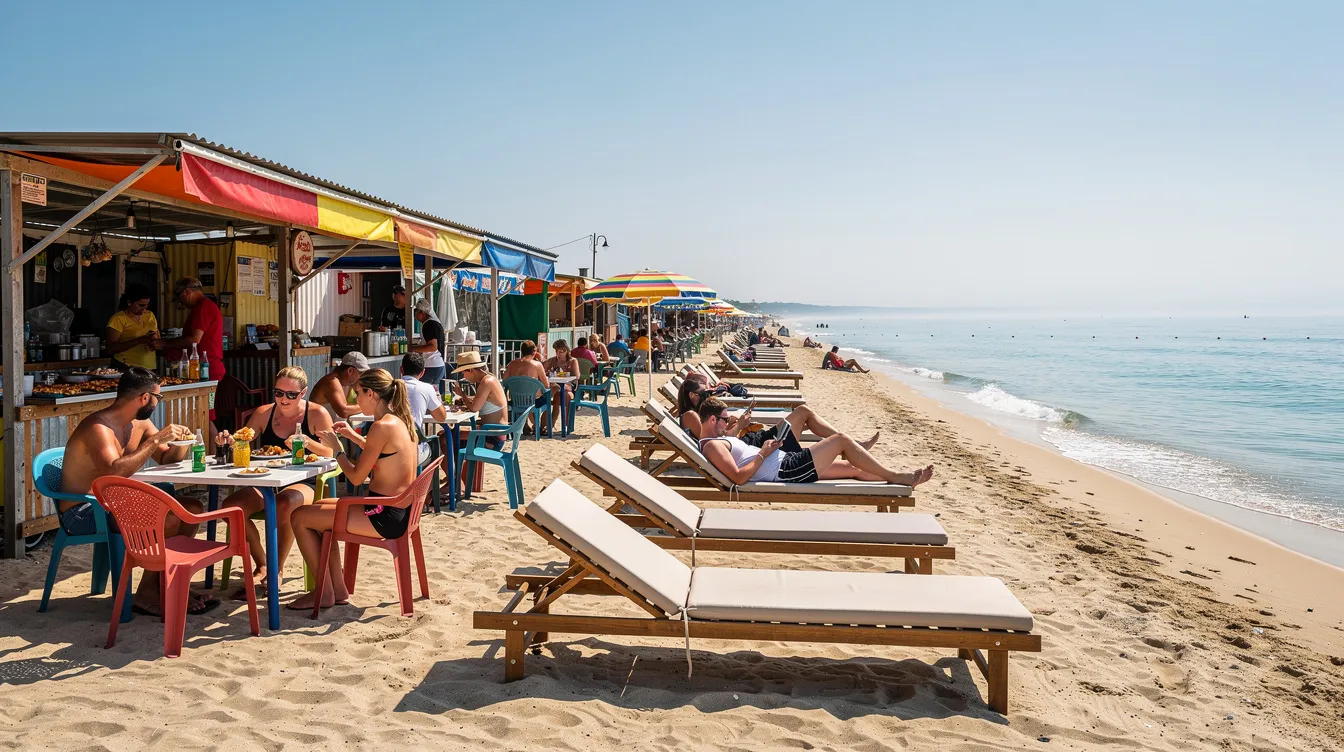
The vibe is laid-back and a bit scruffy. Kids play in the shallows. Couples share grilled prawns. By evening, the beachside restaurants shift to cocktails and cold beer as the sun drops. None of this is polished. All of it is functional.
Getting there
Bicycle is the right answer if you have time and it is not midday. The ride follows Hai Ba Trung Street from the Old Town – flat, easy, about 15-20 minutes. The route passes rice paddies and Tra Que vegetable village, which gives you actual scenery instead of just transportation. Bike rental in central Hoi An runs 30,000-50,000 VND per day. Even one-way, it’s worth it for the scenery.
Grab or taxi takes 10-15 minutes and costs 60,000-80,000 VND one way (about $3 USD). This is the practical choice when the sun is high or you are carrying beach gear. Drivers know the route and drop you at the main parking lot at the end of Hai Ba Trung.
Motorbike rental runs 120,000-150,000 VND per day if you are comfortable with local traffic. Do not walk the full 4 kilometers. The main road is exposed, has no shade, and is not pleasant in the heat.

When you arrive, people will flag you down 200-300 meters before the beach offering parking. Wave them off and continue to the official lot at the seafront end of Hai Ba Trung Street. Parking costs 5,000-10,000 VND for bikes and scooters. Many beachfront restaurants offer free parking if you eat or drink there – worth asking when you sit down.
When to go
March through August is the good season. The sea is calm, the weather is dry, and swimming is straightforward. Sunny days are consistent, temperatures sit around 25-30°C, and the water is warm enough to stay in without thinking about it.
October through January is rainy season – typhoons, rough water, debris on the sand, sometimes flooding. The beach is not worth a dedicated trip during this period. If you are in Hoi An anyway and get a dry afternoon, fine. But do not plan a beach day around it.
Within any good-weather day, timing matters. Early morning before 10am means fewer people, calmer water, and easier parking. Late afternoon after 3:30pm brings lower heat and better light. Midday is the worst window – harsh sun, crowded parking, and sand that is uncomfortable to walk on barefoot.
Where to sit
The main beach entrance is the busiest spot. Sun loungers cost around 50,000 VND to rent standalone, but most restaurants give you free use of their chairs if you order food or drinks. That is the smarter play – you get a lounger, shade, and a reason to be there without paying twice.
Walk away from the main entrance to find better conditions. Turn right (south) when facing the sea and you reach quieter stretches within five to ten minutes. The sand is cleaner, the spacing between groups is wider, and the atmosphere shifts from crowded to relaxed.
If you are traveling with family, look for the roped-off swimming areas with lifeguards on duty. These are clearly marked and provide designated safe zones. Toilets and showers are available at several places along the beachfront, usually attached to restaurants.
Bringing your own mat or towel works fine if you prefer not to rent a lounger. Shade will be limited unless you claim a spot near the tree line or bring an umbrella.
Swimming and water activities
Swimming is safe during the good season. The waves are gentle and consistent, the seabed is soft sand, and roped-off areas with lifeguards cover the main section of beach. Water is calmer in the morning. Life jackets are available to rent from operators on the beach.
Conditions change completely during typhoon season. Rough water, strong currents, and onshore winds make swimming inadvisable from October through January. Check conditions before planning a beach day if you are visiting during transitional months.
Water activities exist but are not the beach’s main draw. Surfing lessons are available, along with SUP, kayaking, and occasional jet ski rentals. Yoga classes run some mornings on the beach – check locally for current schedules.
One thing worth noting on snorkeling: there is no coral at An Bang. For actual reef snorkeling, you need a boat trip to the Cham Islands – accessible March to September from Cua Dai Pier.
What to eat and drink
Seafood restaurants line the beach and represent the core dining option. Fresh fish, grilled prawns, steamed squid, clams with garlic and chili – the standard Vietnamese beach dishes done well at affordable prices. Most places display the catch on ice so you can point at what you want. No reservations needed. Walk up, sit down, order.
Soul Kitchen has live music at sunset and decent cocktails – more of an evening spot than lunch. The Fisherman is a local favorite with chairs directly on the sand, good wifi, and showers for rinsing off. If you need vegan options, there is at least one dedicated vegan restaurant on the beachfront – ask locally for the current best option.
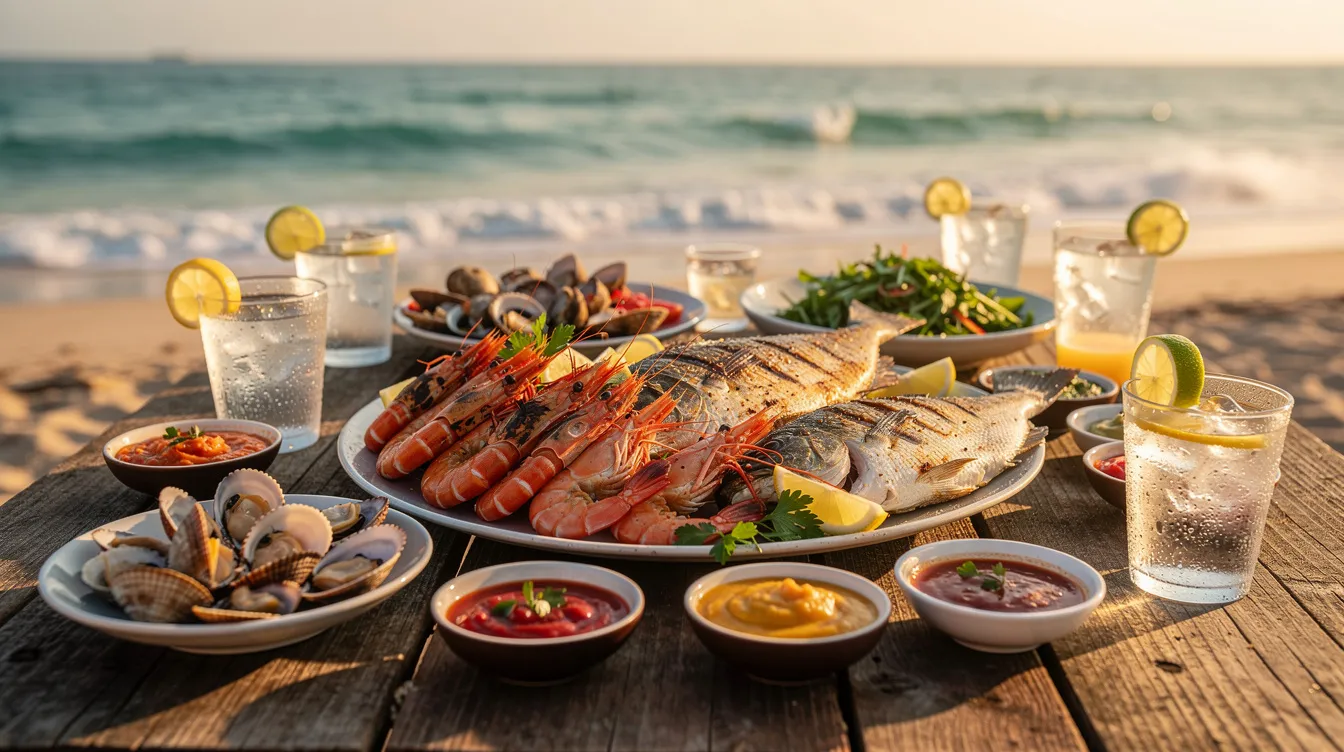
The cafes and coffee shops behind the beachfront serve espresso, coconut coffee, and light breakfasts. Several have reliable wifi, making An Bang a functional place to spend a working afternoon if that is your thing.
Evening shifts to beachfront bars with cocktails, cold beer, and live music. The vibe is casual. Think sunset drinks and conversation, not a club scene. Not all beach bars accept card payments – bring cash to be safe.
An Bang vs Cua Dai
An Bang has more life – more restaurants, more bars, more infrastructure. Cua Dai Beach sits a few kilometers south and is quieter, but it has suffered significant erosion in recent years. Sections are protected by sandbags and sea walls. Fewer dining options sit directly on the beachfront.
For most visitors, An Bang is the right call. If you specifically want solitude and do not care about eating on the sand, Cua Dai works for a sunrise walk or a quiet swim. For a full beach day with food, drinks, and places to sit, An Bang delivers more reliably.
A day at An Bang: how it actually flows
Leave the Ancient Town mid-morning, around 9-10am, by bicycle or Grab. Arrive before parking gets congested. Walk past the main entrance until you find a quieter stretch of sand. Secure a lounger at a beachfront restaurant and order coffee or breakfast.
Spend the late morning swimming and reading. Transition to seafood and cold drinks around noon, then rest through the hottest early afternoon hours. Pick up again around 3:30-4pm as the heat drops. Late afternoon is prime time – the light softens, the crowds thin slightly, the sunset crowd starts arriving.
Stay for an evening drink if you want. The beachside bars are pleasant around 5:30-6pm. Head back to Hoi An by Grab or bicycle once you are ready – the bike ride back in the late afternoon is surprisingly pleasant.
Total time: anywhere from four hours for a half-day to a full day depending on weather, energy, and how much seafood you can handle.
Frequently asked questions
Is An Bang Beach worth visiting from Hoi An?
Yes, for at least a half-day. It is 4km from the Old Town, easy to reach by bicycle or Grab, and has good swimming, cheap seafood on the sand, and a relaxed village feel. It is not a tropical postcard beach. It is a solid local beach that works well as an escape from the Ancient Town.
What is the best time to visit An Bang Beach?
March to August. The sea is calm, the weather is dry, and swimming is straightforward. October to January is typhoon season – rough water, rain, and debris on the sand. Morning before 10am and late afternoon after 3:30pm are better than midday in the hot months.
How do you get from Hoi An to An Bang Beach?
Bicycle along Hai Ba Trung is the best option if it is not midday – flat, 15-20 minutes, passes rice paddies and Tra Que village. Bike rental runs 30,000-50,000 VND a day. Grab or taxi takes 10-15 minutes and costs around 60,000-80,000 VND one way. Do not walk it in the heat.
Is An Bang Beach clean?
The central section around the main entrance can have litter, especially after storms or busy weekends. Walk 5-10 minutes north or south and the sand is noticeably cleaner and less crowded. The water is generally fine for swimming during dry season.