
About Hoi An: The Complete FAQ
The basics
What is Hoi An?
Hoi An is a small port city in central Vietnam, about 30km south of Da Nang. Its Ancient Town is a UNESCO World Heritage Site: a dense grid of narrow streets, centuries-old merchant houses, and more tailors than you can reasonably count. The wider city has a population of around 150,000, but the area visitors spend their time in is compact enough to walk in an afternoon.
What does “Hoi An” mean in Vietnamese?
Hoi An (Hoi Anh in Vietnamese script: Hội An) translates roughly as “peaceful meeting place.” The name reflects its history: for centuries, Hoi An was one of Southeast Asia’s most active trading ports, where Japanese, Chinese, and European merchants settled alongside the local Vietnamese population.
Where is Hoi An located?
Hoi An sits on the Thu Bon River in Quang Nam Province, central Vietnam. It’s about 30km south of Da Nang, 120km south of Hue, and roughly midway between Hanoi and Ho Chi Minh City along the country’s narrow coastal strip.
What province is Hoi An in?
Hoi An is in Quang Nam Province. For travel purposes, the nearest major city is Da Nang, which has the closest international airport and is about 45 minutes away by road.
What country is Hoi An in?
Vietnam. Hoi An is in central Vietnam, on the coast of the South China Sea.
How big is Hoi An?
The city covers around 60 square kilometres, but most visitors spend their time in a much smaller area. The Ancient Town is a walkable core of roughly 30 city blocks. An Bang Beach, the nearest beach, is about 3km east of the Old Town centre.
How old is Hoi An?
The town has existed as a trading settlement since at least the 15th century. Most buildings surviving in the Ancient Town today date from the 17th and 18th centuries. The Japanese Covered Bridge, one of the Old Town’s most recognisable landmarks, was built in the late 1590s. UNESCO recognised the Ancient Town as a World Heritage Site in 1999.
Why are all the buildings yellow?
The colour comes from a pigment traditionally made from the bark of a local tree mixed with lime plaster. It’s so associated with Hoi An that local authorities require building owners in the Ancient Town to maintain it. The shade has become more standardised over time. Photographs from the early 20th century show more variation, but it’s been the dominant look for well over a century.
What river runs through Hoi An?
The Thu Bon River runs along the southern edge of the Ancient Town before flowing out to sea south of An Bang Beach. The riverside strip, particularly around the Japanese Covered Bridge and the lantern-lit boat docks near Nguyen Phuc Chu Street, is one of the most photogenic parts of the city, especially at dusk.
What is Hoi An famous for?
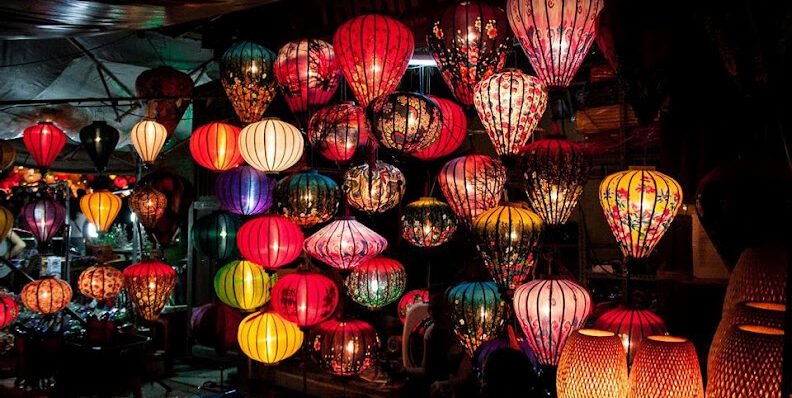
Four things above everything else: its Ancient Town (one of the best-preserved trading ports in Southeast Asia), its tailoring industry, its food, and its silk lanterns. Hoi An has more tailors per square kilometre than any comparable city in Vietnam, a food scene built on dishes you won’t find done quite the same way elsewhere (cao lau, white rose dumplings, banh mi), and a tradition of handmade silk lanterns that fills the Old Town with colour every evening.
Why is Hoi An a UNESCO World Heritage Site?
UNESCO listed Hoi An’s Ancient Town in 1999 as an outstanding example of a South-East Asian trading port from the 15th to the 19th century. What sets it apart is the largely intact mix of Vietnamese, Chinese, Japanese, and European architectural influences built up over centuries of international commerce. Most ports of this type were either destroyed or modernised beyond recognition. Hoi An survived because trade declined in the 19th century and the town was largely bypassed by development. Read the full citation at the UNESCO World Heritage listing for Hoi An.
Is Hoi An worth visiting?
Yes, but with one honest caveat. The Ancient Town is impressive and unlike anywhere else in Vietnam. The food is some of the best in the country. The problem is that Hoi An is extremely popular, and the central streets have become increasingly tourist-facing: many blocks in the Old Town are now almost entirely restaurants, bars, and souvenir shops. It works best for visitors who arrive early (before tour groups), eat one street back from the main drag, and don’t come expecting an untouched Vietnamese community. Go in knowing what it is and you’ll have a great time.
Getting to Hoi An
Which airport do you fly into for Hoi An?
Da Nang International Airport (DAD), about 30km north of Hoi An. There’s no airport in Hoi An itself. Da Nang has direct connections to Singapore, Bangkok, Hong Kong, Kuala Lumpur, and Seoul, plus frequent domestic flights from Hanoi and Ho Chi Minh City. Current routes and airline information are on the Da Nang Airport website.
How far is Hoi An from Da Nang?
About 30km by road, which takes 45 to 60 minutes depending on traffic. The coastal route via My Khe Beach is a few kilometres longer but worth asking a driver to take if you’re not in a hurry.
How do you get from Da Nang airport to Hoi An?
Grab (Vietnam’s ride-hailing app) is the easiest option: 200,000 to 250,000 VND, roughly 45 minutes, and no negotiating. Fixed-price taxis from the airport rank cost a little more. A private transfer costs 300,000 to 400,000 VND but includes meet-and-greet at arrivals. There’s no direct public bus from the airport to Hoi An.
How do you get from Da Nang city to Hoi An?
Grab: 150,000 to 200,000 VND, 30 to 45 minutes from central Da Nang. Yellow Taxi and Vinasun are reliable metered alternatives. Local bus 1 runs from Da Nang bus station to Hoi An for around 20,000 VND if you’re counting every dong, though it’s slow and you’ll need to figure out the stops yourself.
How much does a taxi or Grab cost from Da Nang to Hoi An?
From Da Nang airport: 200,000 to 250,000 VND (about $8 to $10 USD). From Da Nang city centre: 150,000 to 200,000 VND. Surge pricing and time of day affect the Grab price. If you’re taking a non-metered taxi, agree on the fare before you get in.
How do you get from Hanoi to Hoi An?
Flying is the obvious choice. Hanoi to Da Nang takes about 1.5 hours on Vietnam Airlines, VietJet, or Bamboo Airways, and costs $30 to $80 USD depending on how far ahead you book. The overnight train from Hanoi to Da Nang takes 16 to 19 hours and is worth considering if you want to see the landscape. Buses cover the route in 20-plus hours and only make sense if budget is the overriding concern.
How do you get from Ho Chi Minh City to Hoi An?
Fly to Da Nang. The flight takes about 1.5 hours and costs $25 to $60 USD on VietJet, Vietnam Airlines, or Bamboo Airways. From Da Nang airport, Grab to Hoi An takes around 45 minutes. Sleeper buses run the full route in 18 to 22 hours if you want to save on flights. The train from Ho Chi Minh City to Da Nang takes about 17 hours.
How far is Hoi An from Hanoi?
About 760km by road, or 1.5 hours by air to Da Nang. Hoi An sits roughly in the middle of Vietnam, which is why it ends up on most north-to-south itineraries.
How far is Hoi An from Ho Chi Minh City?
About 900km by road. The practical answer: 1.5 hours by air to Da Nang, then 45 minutes to Hoi An.
How far is Hoi An from Hue?
About 120km, which takes 2.5 to 3 hours by road. The scenic route crosses the Hai Van Pass: one of the most dramatic stretches of road in Vietnam, with Pacific Ocean views on both sides. Most people hire a car with a driver for this leg, or rent a motorbike if they’re comfortable on one. The bus covers the route fine if you’re not fussed about stopping at the pass.
Getting around Hoi An
How do you get around Hoi An?
Three options cover most situations. On foot: the Ancient Town is compact enough that you won’t need anything else for the Old Town itself. By bicycle: rental shops are everywhere and charge around 60,000 to 80,000 VND per day – it’s the best way to reach An Bang Beach and the villages outside town. By motorbike: 120,000 to 180,000 VND per day, fine if you’re comfortable riding one, but traffic in and around the Old Town is chaotic in the mornings and evenings. Grab and taxis fill the gaps for longer trips or when you’d rather not arrive sweaty.
Can you walk everywhere in Hoi An?
Inside the Ancient Town, yes. The main streets – Tran Phu, Nguyen Thai Hoc, Bach Dang along the river – are all within ten minutes of each other on foot. The Old Town is also car-free during certain hours, which makes walking around pleasant rather than a survival exercise. Beyond the Old Town, distances stretch. An Bang Beach is 3km away and walkable in theory but unpleasant in the heat. For anything outside the central core, a bicycle or Grab makes more sense.
Are motorbikes or bicycles worth renting?
Bicycles, yes – almost always. Hoi An is flat, the roads between town and the beach are manageable, and cycling through the rice fields near Tra Que Vegetable Village is one of the better things you can do here. Motorbikes are fine if you have experience, but be realistic: Vietnamese traffic doesn’t follow rules you’ll recognise, and the roads around the Old Town are busy. If you’ve never ridden one before, Hoi An is not the place to start. Rental shops are easy to find around Tran Hung Dao Street and near the An Bang Beach entrance road.
Is Grab available in Hoi An?
Yes. Grab works well in Hoi An for both GrabCar and GrabBike. It’s the most reliable way to get to and from Da Nang without negotiating a fare. The app sometimes takes a minute longer to find a driver than it would in Da Nang city, but it’s generally available throughout the day. Some drivers will try to negotiate outside the app near the Old Town entrance – stick with the app price.
When to visit
When is the best time to visit Hoi An?
February to April. The dry season runs from roughly February through August, but the shoulder months of February to April hit the sweet spot: dry, not yet scorching, and less crowded than the peak summer period when domestic tourism surges. July and August are hot and humid (think 35C-plus) but perfectly manageable if you plan beach mornings and indoor afternoons. October and November bring the heaviest rain and the highest flood risk – if you’re visiting then, know what you’re getting into.
When is rainy season in Hoi An?
The main rainy season runs from October through December, with October and November being the worst months. This is when central Vietnam gets the tail end of typhoon season and the Thu Bon River levels rise significantly. Brief afternoon showers can happen any time of year, but from October onward the rain is heavier, more sustained, and less predictable. January can also be cool and overcast, though serious flooding is less likely by then. Check the AccuWeather forecast for Hoi An before you travel if you’re going between September and January.
Does Hoi An flood?
Yes, and it’s worth being straightforward about this. The Ancient Town floods regularly during October and November when the Thu Bon River overflows. Some years it’s ankle-deep water on Bach Dang Street for a day or two. Other years the Old Town is inaccessible for several days. Local businesses are well-practiced at moving stock upstairs and reopening quickly, and some visitors specifically time their trip to experience it – the lantern-lit flood water at night is striking. But if you’re travelling with young kids, mobility issues, or a tight itinerary, visit between February and August instead.
What is the weather like in December and February?
December sits at the tail end of rainy season: expect cool temperatures (18 to 24C), some overcast days, and occasional rain, but nowhere near the October-November peaks. It’s a perfectly reasonable time to visit if you don’t mind a jumper in the evenings. February is significantly better: the dry season is establishing itself, temperatures are comfortable (22 to 27C), and the Old Town is noticeably less crowded than peak months. February is one of the better months to visit if your dates are flexible.
When is the Hoi An Lantern Festival?
The Lantern Festival happens on the 14th day of each lunar month, which works out to roughly once a month on the Gregorian calendar. It falls on a different date each month – sometimes early in the month, sometimes late. On festival evenings, electric lights in the Ancient Town are turned off, lanterns are lit along the streets and the river, and paper lanterns are released onto the Thu Bon. It’s not a one-off annual event. Check a lunar calendar for the upcoming dates, or search “Hoi An lantern festival 2026 dates” for a month-by-month list.
What happens at the Lantern Festival?
The Ancient Town switches off its electric lights from around 7pm. Street vendors sell handmade silk and paper lanterns throughout the day leading up to it. In the evening, locals and visitors float small candle lanterns (called hoa dang) on the Thu Bon River, which fills with drifting lights by 8pm. Traditional music performances happen along Bach Dang riverside and in the main squares. It’s one of the most photogenic things you can witness in Vietnam – and because it happens monthly rather than once a year, you don’t need to plan your entire trip around it.
Where does the Lantern Festival take place?
The heart of it is the Ancient Town, specifically the streets around Nguyen Thai Hoc, Tran Phu, and the Bach Dang riverside strip along the Thu Bon. The lantern release happens from the boat docks near the An Hoi bridge and from the riverbank south of the Old Town. The whole area is pedestrian-only on festival nights, so arrive on foot or drop off nearby and walk in. It gets very crowded by 8pm – arriving at 6:30pm gives you time to find a spot along the river before the main crowds arrive.
How long to stay
How many days do you need in Hoi An?
Three days is the honest minimum for doing it properly. Day one covers the Ancient Town on foot: the Japanese Covered Bridge, the assembly halls, the merchant houses, a tailor visit, and dinner somewhere that isn’t on the main tourist strip. Day two works well as a beach day at An Bang, with a bicycle ride out through the villages. Day three opens up: a cooking class, a day trip to My Son Sanctuary or the Cham Islands, or simply more time wandering the streets you rushed past on day one. Two days is doable but you’ll feel like you left before you were finished. Five days is not too many if you slow down and use it as a base.
Is two days in Hoi An enough?
It’s enough to see the highlights, not enough to feel like you’ve been there. Two full days works if you’re disciplined: Ancient Town in the morning of day one before the tour groups arrive, tailors in the afternoon, An Bang Beach on day two. You won’t have time for a day trip, a cooking class, or the slower kind of wandering that makes Hoi An worth visiting in the first place. If you can stretch it to three nights, do it.
Should I base myself in Hoi An or Da Nang?
Hoi An, almost always. Da Nang is a functional city with good restaurants and a long beach, but it doesn’t have much character compared to Hoi An. The only reason to base yourself in Da Nang instead is if you’re doing serious business there, have an early flight, or are specifically chasing Da Nang’s surf and nightlife scene. For anyone whose priority is the Old Town, the food, the tailors, or the beaches near Hoi An, staying in Hoi An and day-tripping to Da Nang (rather than the reverse) makes far more sense. The 45-minute Grab ride between them is cheap and easy. For accommodation options in both areas, see our guide to where to stay in Hoi An.
Where to stay
What are the main areas to stay in Hoi An?
Three areas cover most visitors. The Ancient Town (Old Town) puts you inside or right next to the UNESCO zone: maximum atmosphere, walkable to everything, and noisy in the evenings on the main streets. The An Hoi peninsula sits across the river from the Old Town – quieter, still walkable via the footbridge, and where you’ll find better value accommodation without sacrificing access. An Bang Beach, 3km east, is the right call if your priority is beach time over Old Town access: relaxed, increasingly good for food, and easy to reach by bicycle. Our full guide to where to stay in Hoi An covers all three areas with specific hotel recommendations.
Is it better to stay in the Old Town or near the beach?
Depends what you’re here for. The Old Town is the right base if this is your first visit and you want to be in the middle of it all: the lanterns, the restaurants, the tailors, the general organised chaos. An Bang Beach makes more sense if you’ve seen the Old Town before, travel with kids who need a pool and space, or are staying longer than four or five days and want a quieter rhythm. The two areas are close enough (15 minutes by bicycle) that you’re not sacrificing one for the other regardless of where you base yourself. See our An Bang Beach guide for accommodation options near the beach.
Is Hoi An good for families?
Yes, with some caveats. The Old Town itself is good for kids: the lanterns, the river, the boats, and the chaos of the market hold attention well. The beaches at An Bang are calm and shallow, good for young swimmers. The main practical issue is that Hoi An’s streets – particularly in and around the Old Town – are shared with motorbikes and are not especially child-friendly to navigate on foot. Families tend to do better staying slightly outside the Old Town centre where there’s more space, or at a resort near An Bang with a pool. The heat between May and September is also worth factoring in with young kids: 35C-plus with high humidity is tough for a full day of sightseeing.
What to eat
What is Hoi An famous for food?
Three dishes are specific to Hoi An in a way you won’t find replicated properly anywhere else in Vietnam: cao lau (thick noodles in a pork broth made with water drawn from a specific local well, topped with crispy crackers), white rose dumplings (translucent rice paper parcels filled with shrimp, steamed and topped with fried shallots), and banh mi – Hoi An’s version of the Vietnamese sandwich, widely considered the best in the country. Beyond those three, the wider food scene covers everything from fresh seafood grilled on the street to cooking-class-worthy central Vietnamese home cooking. Browse restaurants and cafes in the Hoi An dining directory.
What is cao lau?
Cao lau is a noodle dish unique to Hoi An and, according to locals, impossible to replicate correctly outside of it. The thick, slightly chewy noodles are made with water from a specific well in the Old Town (Ba Le Well), which gives them a texture and flavour nothing else quite matches. They’re served in a small amount of rich pork broth with slices of char siu pork, fresh herbs, bean sprouts, and crispy rice crackers on top. It’s not a soup – more of a dressed noodle dish with a small amount of liquid. Order it at Thanh Cao Lau on Tran Phu or from any of the market stalls in the covered market on Tran Quy Cap. Expect to pay 40,000 to 60,000 VND.
What is white rose dumpling?
White rose (banh bao vac) is a Hoi An speciality: a thin, translucent rice paper wrapper folded into a rose shape around a filling of minced shrimp or pork, steamed and served topped with crispy fried shallots and a dipping sauce. The name comes from the shape, which looks like a white rose when done well. They’re produced almost exclusively by a single family in Hoi An under a recipe kept within that family for generations, then sold to restaurants around town. You’ll find them on virtually every menu in the Old Town. They should cost around 50,000 to 80,000 VND for a plate of eight or ten.
What are the must-try dishes in Hoi An?
Start with the three Hoi An classics: cao lau, white rose dumplings, and banh mi (Phuong’s Banh Mi on Le Loi is the most famous, for good reason). After those, work through: mi quang (turmeric noodles with pork, shrimp, peanuts, and herbs – a central Vietnamese staple), com ga (Hoi An chicken rice, which is better here than anywhere), and fresh spring rolls from the market. For seafood, An Bang Beach restaurants do whole grilled fish and clams simply and well. Save the cooking classes for day two or three once you know what you want to learn to make.
Where is the best place to eat in Hoi An?
The honest answer is: one street back from the river. The restaurants on Bach Dang and the main Old Town thoroughfares are almost all tourist-facing, expensive for what they are, and mediocre. Walk one block inland and the quality-to-price ratio improves significantly. The covered market on Tran Quy Cap is where locals eat breakfast and lunch: cheap, fast, and good. For banh mi, Phuong’s on Le Loi is worth the queue. For cao lau, the stalls in the market beat most sit-down restaurants. For a proper dinner, look for places on Nguyen Thai Hoc and the streets running parallel to it. Browse the full restaurant listings in the Hoi An dining directory.
Tailoring
Why is Hoi An famous for tailoring?
Hoi An has been a centre for textile production and trade since its days as a major port, when fabric was one of the most valuable commodities moving through the town. The skills stayed long after the trading ships stopped coming. Today the city has hundreds of tailors operating out of everything from polished shopfronts to family workshops in the back streets, and the combination of low labour costs, locally sourced fabrics, and generations of accumulated craft knowledge means you can get well-made custom clothing here at a fraction of what it would cost at home. Browse tailor listings in the Hoi An tailors directory.
What should you get made in Hoi An?
Suits and blazers are the most popular and tend to deliver the best results: the tailors here have made thousands of them and know exactly what they’re doing. Dress shirts, trousers, and ao dai (the traditional Vietnamese dress) are all strong bets. Shoes can be made to order at several shops, though quality varies more than with clothing. Where tailoring in Hoi An tends to disappoint is with very complex western dresses or anything requiring unusual construction – stick to classic cuts and well-understood silhouettes for the best outcome.
How much does a tailored suit cost in Hoi An?
Expect to pay $150 to $300 USD for a well-made two-piece suit in good fabric, with a second pair of trousers adding $50 to $80. The wide range reflects the difference in fabric quality and the tailor you choose. Suits offered for $80 or $100 exist – the fabric will be poor and the finish will show it. Mid-range tailors charging $180 to $250 in decent wool or wool-blend fabric is the realistic sweet spot. The most reputable shops charge $300-plus and use imported European fabric. Whatever you pay, get an itemised quote covering fabric, lining, buttons, and labour before you commit.
How long does tailoring take?
A suit typically takes 48 to 72 hours with at least one fitting. Simpler items like shirts or trousers can be done in 24 hours. Most shops will promise faster if you push them – resist the temptation. Rushing a tailor in Hoi An is the single most reliable way to end up with something unwearable. Build at least three days into your itinerary if tailoring is a priority, ideally visiting the tailor on day one so you have time for a proper fitting and any alterations before you leave. Rush jobs done in a few hours rarely end well.
How do you choose a good tailor in Hoi An?
Three things matter most. First, look at the fabric selection: a good tailor stocks proper suiting fabric with clear weight and composition labels, not unmarked bolts of shiny polyester. Second, ask to see finished garments or photos of previous work – reputable shops have both. Third, be wary of anyone who guarantees same-day or next-day delivery on anything complex. The tailors on and around Tran Hung Dao Street and Le Loi are generally more established than the tourist-strip shops on Tran Phu. Read reviews carefully and ignore any shop that sends touts onto the street to pull you in. Browse reviewed tailor listings in the Hoi An tailors directory.
Shopping & the night market
What should you buy in Hoi An?
Silk lanterns are the obvious one: the handmade ones sold by Old Town lantern shops are the real thing, not factory imports, and they pack flat. Custom clothing from a tailor is the other big-ticket item worth the spend. Beyond those: hand-embroidered linens, lacquerware, ceramic pieces from the nearby Thanh Ha Pottery Village, and Vietnamese coffee beans from any of the specialty coffee shops around the Old Town. The silk sold by the metre varies wildly in quality – if you’re buying for a tailor, let the tailor source the fabric rather than buying it separately and bringing it in. Avoid anything claiming to be antique unless you know what you’re looking at.
Where is the night market and when does it open?
The Hoi An Night Market runs along Nguyen Hoang Street on the An Hoi peninsula, just across the footbridge from the Old Town. It opens around 5pm and runs until around 11pm every night. The market sells a mix of lanterns, souvenirs, clothing, and street food. It’s worth a walk-through for the atmosphere, but don’t expect bargain prices – vendors know exactly what tourists will pay. The street food section near the river end of the market is the most worthwhile part. For a broader look at what’s worth buying, check the Hoi An shopping directory.
What is the difference between the night market and the Ancient Town market?
The night market on An Hoi peninsula is primarily for tourists: lanterns, souvenirs, knock-off clothing, and street food, open from early evening. The covered market (Cho Hoi An) on Tran Quy Cap runs during the day and is where locals shop: fresh produce, meat, fish, dry goods, and cheap local food stalls at the back. The covered market is the better experience if you want to see how the city functions – and the food stalls inside serve some of the cheapest and most authentic meals in town. Both are worth visiting for different reasons.
Should you haggle in Hoi An?
In the markets and with street vendors, yes – gentle haggling is expected and prices are set with negotiation in mind. A reasonable opening offer is around 60 to 70 percent of the asking price, and most transactions settle somewhere in between. In proper shops, particularly tailor shops and boutiques with displayed prices, haggling is less standard and often counterproductive: pushing too hard on price at a good tailor signals that you’re the kind of customer they’d rather not take on. The key distinction is fixed-price shops versus market stalls. When in doubt, ask politely if there’s any flexibility – the worst that happens is they say no.
Key attractions
What is the Hoi An Ancient Town, and do you need a ticket?
The Ancient Town is the UNESCO-listed historic core of Hoi An: a compact grid of streets lined with 15th to 19th century merchant houses, Chinese assembly halls, temples, and the iconic Japanese Covered Bridge. You do need a ticket to enter most of the individual attractions inside it. The standard ticket costs 120,000 VND and covers entry to five sites from a list of around 20 – you choose which five. The ticket is sold at booths around the Old Town perimeter and is checked at each attraction entrance. Walking the streets themselves is free; the ticket is only required when you want to go inside. Buy it before you start exploring rather than scrambling for it at the door of whichever assembly hall you wander into first.
What is the Hoi An Memories Show?
Hoi An Memories is a large-scale outdoor performance held at the Hoi An Impression Theme Park on the south bank of the Thu Bon River, about 3km from the Old Town. The show runs most evenings and involves around 500 performers recreating scenes from Hoi An’s trading port history through dance, music, and large set pieces on a stage built over the river. It runs for about 75 minutes and tickets cost around 300,000 to 500,000 VND depending on seating tier. It’s a genuine spectacle and worth seeing once, particularly for first-time visitors who want context for the town’s history. Book in advance on busy nights – it sells out. Tickets are available through most hotel desks and tour agencies in town.
What are the coconut basket boats?
Basket boats (thuyen thung) are circular woven bamboo vessels traditionally used by fishermen along this stretch of the Vietnamese coast. The tourist version involves a short ride through the water coconut palm forest in the Cam Thanh village area, about 5km from the Old Town, with boatmen spinning the baskets in circles as a crowd-pleasing trick. It’s touristy by definition – you’re in a bamboo basket being spun around by someone doing it for the tenth time today – but fun and worth an hour if you go in with the right expectations. Most tours include a short fishing demonstration. Prices run from 150,000 to 250,000 VND per person depending on how you book. Going directly through a local operator rather than a hotel desk cuts the price significantly. Browse activity listings in the Hoi An activities directory.
How do you get to the Cham Islands from Hoi An?
Speedboat from Cua Dai pier, about 4km from the Old Town. The crossing takes 15 to 20 minutes and boats run from roughly 7:30am. Day trips to the Cham Islands (Cu Lao Cham) typically include snorkelling at two or three reef sites, lunch on the island, and time on the beach. Prices run from $25 to $50 USD per person depending on operator and group size. The islands are a UNESCO Biosphere Reserve and the snorkelling is good by Vietnamese standards, though visibility varies by season. Trips run from roughly March to September – seas are too rough outside that window for comfortable crossings. Book through a reputable operator rather than a random beach tout. Browse tour listings in the Hoi An activities directory.
How do you get to My Son Sanctuary from Hoi An?
My Son is about 40km southwest of Hoi An, roughly an hour by road. Most visitors go on a half-day or full-day organised tour, which is the easiest option: transport, entry ticket, and a guide are included for around $15 to $25 USD per person. You can also hire a motorbike taxi or a car with driver for around 300,000 to 500,000 VND for the return journey if you’d rather go independently. My Son is the most significant Cham temple complex in Vietnam: a collection of Hindu towers built between the 4th and 14th centuries, partially destroyed by US bombing in 1969, and listed as a UNESCO World Heritage Site in 1999. Allow two to three hours on site. Go early – it gets extremely hot by mid-morning and the site has limited shade.
Is Ba Na Hills worth a day trip from Hoi An?
Probably not, unless you’re travelling with children who will enjoy the theme park elements. Ba Na Hills is a French colonial-era hill station turned cable car and entertainment complex about 40km northwest of Da Nang, which puts it around 70km from Hoi An – closer to two hours each way. The Golden Bridge (the one held up by giant stone hands) is photogenic and you’ve likely seen it in photos. The rest of the complex is a theme park with French village facades, roller coasters, and crowds. The entry ticket costs around $35 USD and the full day from Hoi An, including transport, eats the better part of 10 to 12 hours. If you’re based in Da Nang it makes more sense as a half-day. From Hoi An, the Cham Islands or My Son use the same time more effectively. For more ideas, see our best things to do in Hoi An guide.
Things to do
What are the best things to do in Hoi An?
The short list: walk the Ancient Town early in the morning before the tour groups arrive, get something made at a tailor, eat cao lau and white rose dumplings at the covered market, cycle out to An Bang Beach, take a basket boat ride in Cam Thanh, do a half-day cooking class, and make it to at least one Lantern Festival evening on the Thu Bon River. That’s a solid four to five days without padding. Our full things to do in Hoi An guide covers all of these in detail with specific recommendations for operators and timing.
What is there to do in Hoi An at night?
The Old Town at night is one of the better versions of itself: the lanterns are lit, the streets are cooler, and the river looks good with a drink in hand. Practically speaking: dinner at one of the restaurants on Nguyen Thai Hoc or the streets around it, a walk along Bach Dang riverside, a beer at one of the bars on Le Loi or around the An Hoi peninsula. The night market on An Hoi is worth a walk-through for the atmosphere. For a bigger evening out, Why Not Bar on Nguyen Thai Hoc is the most reliably busy spot. The Hoi An Memories show is the main ticketed evening event if you want something structured. Browse nightlife listings in the Hoi An nightlife directory.
What can you do in Hoi An on a rainy day?
More than you’d think. The covered market on Tran Quy Cap is fully sheltered and worth a couple of hours regardless of weather. The assembly halls and merchant houses in the Ancient Town are all indoors. A cooking class is an obvious good choice – most run in the morning and include a market visit, so a light rain barely affects them. The Museum of Folk Culture and the Museum of Trade Ceramics are both small, interesting, and dry. Tailors are particularly happy to see you on rainy days when foot traffic drops. The main thing that doesn’t work in heavy rain is cycling and anything beach-related. Everything else in Hoi An carries on largely unaffected.
Is An Bang Beach worth visiting?
Yes. An Bang is one of the better beaches in central Vietnam: wide, not overcrowded outside peak domestic holiday periods, with a decent selection of beach bars and restaurants along the shore. The water is calm enough for swimming most of the year (the exception being October to January when swells increase). It’s 3km from the Old Town – an easy 15-minute bicycle ride through rice fields and village roads that’s worth doing for the journey as much as the destination. It gets crowded with domestic tourists on summer weekends, but weekday mornings are reliably quiet. Our An Bang Beach guide covers the best spots to eat, drink, and stay along the beach.
Can you swim at Hoi An’s beaches?
Yes, for most of the year. An Bang and Cua Dai beaches are the main swimming spots, both with calm enough conditions from roughly February through September. From October through January, swells increase and rip currents become more common – red flags are taken seriously here and you should respect them. Jellyfish are occasionally an issue in warmer months, particularly from May to August. Neither beach has lifeguards stationed along the full stretch, so swimming with awareness of conditions matters. The water is warm year-round, hovering between 23C in January and 30C at peak summer. See our An Bang Beach guide for current conditions and the best entry points.
Practical info
Is Hoi An safe for tourists?
Yes, it’s one of the safer destinations in Southeast Asia for visitors. Violent crime against tourists is rare. The main issues are petty theft (bag snatching from motorbikes is occasional in busier areas, so keep bags on the side away from the road), overcharging in markets and with unlicensed taxis, and the usual scams around tailors and tour bookings that target anyone who looks like they haven’t done their research. Common sense applies: don’t flash expensive gear, use Grab rather than unmarked taxis, and agree on prices before committing to anything. The Old Town at night is busy and well-lit and feels safe to walk.
Is Hoi An expensive?
By Southeast Asian standards, it sits in the middle. Budget travellers can eat well and stay somewhere decent for $25 to $40 USD per day. Mid-range travellers spending on a good hotel, restaurant meals, and activities should budget $80 to $150 per day. Where Hoi An gets expensive relative to the rest of Vietnam is tailoring (if you go properly), the Hoi An Memories show, Cham Islands day trips, and accommodation in the Old Town centre during peak season. Street food and market meals remain cheap: a bowl of cao lau costs 40,000 to 60,000 VND, a banh mi around 30,000 VND. The Numbeo cost of living data for Hoi An gives a useful benchmark for current prices.
How much is a beer in Hoi An?
At a local street stall or market: 15,000 to 25,000 VND for a can of Bia Saigon or Huda (the local central Vietnamese brew). At a bar on the Old Town main strip: 40,000 to 70,000 VND for a draught or bottle. At a rooftop or tourist-facing bar: 70,000 to 120,000 VND. Happy hour runs at most bars from around 5pm to 7pm and typically brings draught beer down to 20,000 to 30,000 VND. Huda Beer is the regional choice and worth trying if you haven’t had it.
What currency is used in Hoi An?
Vietnamese dong (VND). US dollars are accepted at some hotels and tour operators but you’ll get a worse effective rate than paying in dong. All street food, market stalls, local restaurants, and most shops are dong only. The exchange rate as a rough rule of thumb: 25,000 VND to $1 USD, though this fluctuates. Check the current rate before you arrive.
Where can you exchange money or use ATMs in Hoi An?
ATMs are plentiful in and around the Old Town – Vietcombank and Techcombank machines are the most reliable and charge lower fees than the independent ATMs near the tourist areas. Most ATMs cap withdrawals at 3,000,000 to 5,000,000 VND per transaction. For currency exchange, the gold shops (tiem vang) on Tran Phu and Le Loi typically offer better rates than hotel exchange desks or airport counters. Bring some dong from the airport ATM on arrival rather than relying on exchanging cash at the hotel.
Do people speak English in Hoi An?
In the tourist areas of the Old Town, An Bang Beach, and most hotels and restaurants catering to visitors: yes, functional English is widespread. In local markets, residential streets, and with older residents: much less so. Hoi An has been receiving foreign tourists for long enough that basic travel English is common among anyone working in hospitality or retail. Google Translate with the camera feature handles menus and signs well when English isn’t available.
How do you pronounce “Hoi An”?
Roughly “Hoy An” – two short syllables with a slight rising tone on the second. The Vietnamese tones make the precise pronunciation more complex than that (Hội An has a falling-rising tone on Hội and a flat tone on An), but “Hoy An” is close enough that every local will understand you immediately. Don’t stress about perfect tones – Vietnamese speakers are well-practised at understanding tourist attempts at place names.
What time zone is Hoi An in?
Indochina Time (ICT), which is UTC+7. Vietnam does not observe daylight saving time, so the offset is constant year-round. If you’re coming from Bangkok or Jakarta, no adjustment needed. From Singapore or Kuala Lumpur, you’re going back one hour.
Is there good WiFi and mobile coverage in Hoi An?
WiFi in hotels, cafes, and restaurants is generally reliable and fast by regional standards. For mobile data, buying a local SIM on arrival in Vietnam is straightforward and cheap: Viettel, Mobifone, and Vietnamobile all sell tourist SIMs at Da Nang airport and in town for around 100,000 to 200,000 VND with several gigabytes of 4G data included. Coverage in the Old Town and along the beach is strong on all major networks. Viettel has the best rural coverage if you’re planning day trips to outlying areas.